
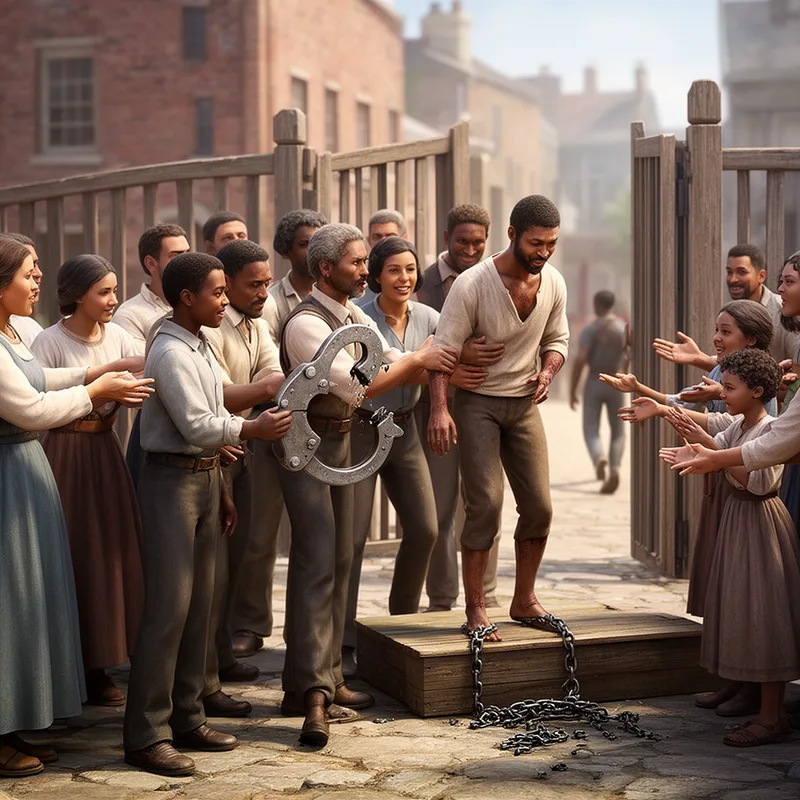
antislavery
- noun
- /ˌæntiˈsleɪvəri/
- The antislavery movement gained momentum in the early 19th century as advocates worked tirelessly to end the practice of slavery.
Examples
-
Like many of his contemporaries, du Var used the vocabulary of antislavery in discussing the workers, referring both to their enfranchisement and their eventual emancipation.
Academic text (2018) -
Over the next few months, the antislavery
Blog text (14) -
That three of these men and women were African American slaves reinforces recent scholarship that connects Edwards's tentative antislavery.
Academic text (2005) -
Many of the leaders in the antislavery struggle believed that all people deserve freedom and equality.
-
In the United States, the antislavery activists organized rallies and wrote pamphlets to raise awareness about the horrors of slavery.
Synonyms

 19
6.5
19
6.5

A person who supports ending slavery, especially in the 18th and 19th centuries
 1
7.8
1
7.8
A movement that wants to end slavery
Antonyms
How Supportive

Surface Forms
Morphology
Etymology
Antislavery also names the belief or movement to end slavery and is made from anti- ('against') and slavery ('the system of owning people'). That's why as a noun it means the idea or group that fights to stop slavery.