
animate


 1
4.2
1
4.2
- adjective
- /ˈænɪˌmeɪt/
- Specialized
- This is reflected in our language, in which most nouns are animate.
- animate and inanimate
- an animate object
- animate beings
Loading YouTube…
Watch on YouTubeHe says a single mind cannot belong to two animate creatures, right, much less a larger number.
- He says a single mind cannot belong to two animate creatures, right, much less a larger number.
Examples
-
By removing all that is indigenous to the land, its wildness as well as its resources, its animate mystery as well as its people, we remove ourselves from living power, from the land's capacity to offer us a sense of place and belonging, as well as its potential for renewal and sustenance.
Academic text (1991) -
Winnicott's idea is that a child forms an attachment to an object that is animate or, more often, inanimate, and that the object may be used by the child to cope with difficult emotional situations.
Academic text (2000) -
You claim that the physics of Newton cannot be applied to objects that are 'animate.'
Blog text (25) -
He says a single mind cannot belong to two animate creatures, right, much less a larger number.
-
Their origin cycles, oral traditions, and cosmologies connected them with all animate and inanimate beings, past and present.
Academic text (1995) -
An auspicious place is named after an inanimate or animate object, such as a flying phoenix or a reclining cow.
Academic text (2011) -
Super curious about what this means, you and your friends discuss its juxtaposition of animate and inanimate features before crowding around the sign to read more.
Blog text (20) -
In a world where animate beings are sacred and must be respected, and where ceremonies must be performed and honored, and the breaking of moral and sacred rules implies possible this-world calamity, most traditional American Indian worldviews emphasize preserving existing social relations, identities, and community organization and commitments.
Academic text (2007) -
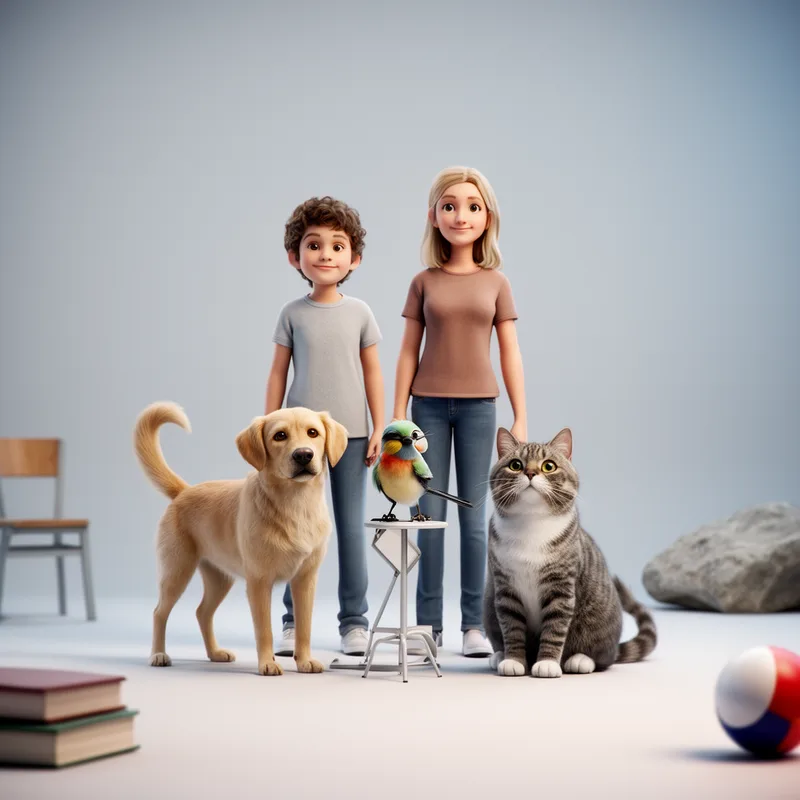
Cats are considered animate beings, unlike objects like chairs or books.
-
In biology class, we learned that all living organisms are classified as animate things.
Antonyms

Surface Forms
Morphology
animate = anim + ate
The root 'anim-' is a Latin combining form (not a standalone English word), so the composition anim + -ate is not transparently recoverable by a typical B1 learner.
Etymology
Animate comes from the Latin anima meaning 'life' or 'soul', the same root as animal. That's why languages call a noun 'animate' when it refers to a living thing.