

anamnestic reaction
- noun
- /ˌænəˈmɛstɪk riˈækʃən/
- Specialized
- After the booster shot, her immune system exhibited a strong anamnestic reaction.
Examples
-
The vaccine was designed to trigger an anamnestic reaction upon exposure to the real virus.
-
Doctors observed an anamnestic reaction when the patient was re-exposed to the allergen.
-
The patient's anamnestic reaction was observed after the booster shot.
-
In children, the anamnestic reaction can be quite strong.
-
After the booster shot, her immune system exhibited a strong anamnestic reaction.
-
Doctors observed an anamnestic reaction when the patient was re-exposed to the allergen.
-
The vaccine was designed to trigger an anamnestic reaction upon exposure to the real virus.
Synonyms
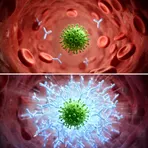
A faster and stronger rise of antibodies when the body meets the same germ again
Surface Forms
Morphology
Knowing 'anamnestic' (pertaining to memory) and 'reaction' (a response) allows a learner to infer a 'memory-related response', so there is a clear compositional clue. However, the precise immunological sense — a rapid, memory-driven antibody response upon re‑exposure to an antigen — is specialized domain knowledge and not fully predictable from the parts alone.
Etymology
The term anamnestic reaction comes from a word meaning 'remember'. The word anamnestic means 'remembering' and reaction is a body's response, so the image is the immune system 'remembering' a germ and making antibodies very quickly when it meets the same germ again.

