
amphidiploidy
- noun
- /ˌæmfɪˈdɪplɔɪdi/
- Specialized
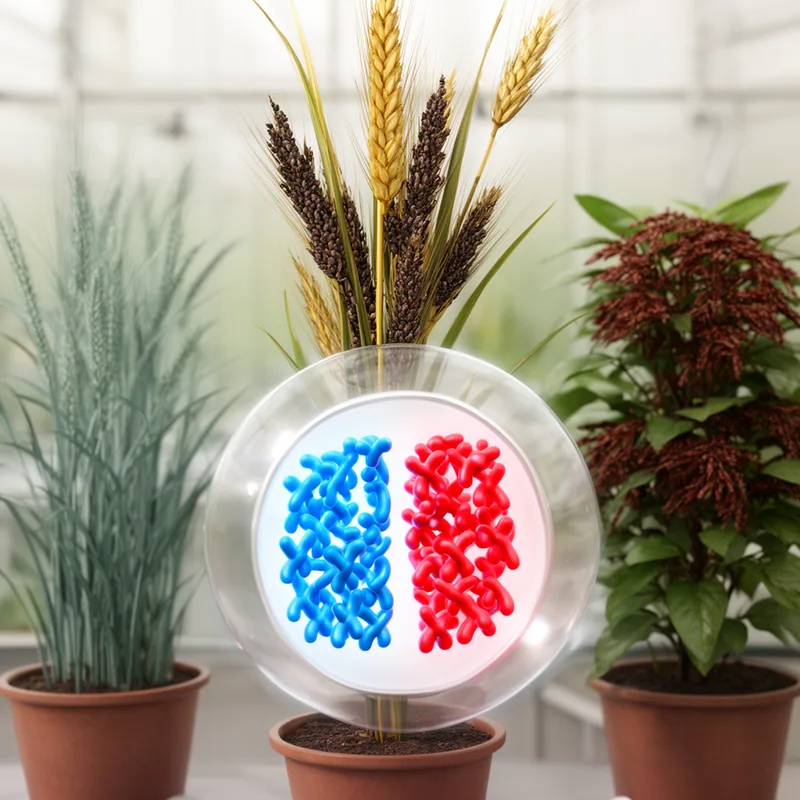
- Amphidiploidy occurs when an organism inherits two complete sets of chromosomes from each of two different species, resulting in a fertile hybrid.
Examples
-
Amphidiploidy often results from hybridization between two distinct species, followed by chromosome doubling.
-
The study focused on the effects of amphidiploidy in wheat breeding programs.
-
Scientists created an artificial amphidiploidy to increase the plant's genetic diversity.
-
The plant exhibits amphidiploidy as a result of hybridization.
-
Researchers are studying amphidiploidy in various plant species.
-
In plant science, amphidiploidy is often used to describe the genetic makeup of new species created through hybridization.
-
The occurrence of amphidiploidy has significant implications for biodiversity in agricultural crops.
Synonyms


 1
9.9
A cell or organism with more than two full sets of chromosomes
Surface Forms
Morphology
amphidiploidy = amphidiploid (semi-transparent) = amphi + diploid + y
The formation of a noun of state from the adjective 'amphidiploid' by adding '-y' is a regular, transparent morphological process.
Etymology
The word amphidiploidy breaks into amphi- 'both', diplo- 'double', and -ploidy 'set', as in diploid. So it means 'double sets from both', which helps you remember that an amphidiploid has two full chromosome sets, one from each of two species.