

alveolar
 1
7.2
1
7.2

- adjective
- /ælˈviːələr/
- Specialized
- Damage to the alveolar walls can significantly reduce the lungs' ability to exchange gases efficiently.
- alveolar macrophages
- alveolar epithelium
- alveolar space
Loading YouTube…
Watch on YouTubeIf you took the alveolar air sacs of the lungs and spread them out, you would easily cover a tennis court.
- If you took the alveolar air sacs of the lungs and spread them out, you would easily cover a tennis court.
Examples
-
Breakdown of alveolar walls causes decreased surface area for gas exchange.
Academic text (2012) -
Round cells located on the alveolar surface were also positive.
Academic text (2000) -
If you took the alveolar air sacs of the lungs and spread them out, you would easily cover a tennis court.
-
Particles of 5 urn or less, however, are deposited in the alveolar region, and clearance may take days or months.
Academic text (2004) -
Experimental work in laboratory animals has suggested that alveolar macrophages are the first cells infected by M. tuberculosis.
Academic text (2000) -
Most patients continued to have significant hypoxaemia, indicated by an alveolar/arterial ratio of oxygen below 0.1.
Academic text (2002) -
A non-invasive technique has recently been developed for measuring alveolar O2 and CO2 tensions.
Academic text (2007) -
When inhaled pathogens are not cleared in the upper airway, they enter the alveolar space, where they are phagocytized and cleared by AMs.
Academic text (2016) -
Multiple sections from both lung specimens showed multiple patchy areas, 0.1 to 0.5 cm of interstitial and alveolar fibrosis.
Academic text (2007) -
The structure of alveolar sacs is crucial for effective oxygen absorption in the respiratory system.
Compounds


- Specialized
The part of the lung with many tiny air sacs where gases pass into the blood

- Specialized
A speech sound made by touching the tongue to the ridge just behind the top front teeth

- Specialized
The part of the jawbone that holds the tooth sockets and supports teeth

- Specialized
A point at the front middle of the upper jaw that people use as a reference for head measurements
- Specialized
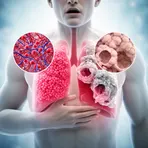
Enlargement of the tiny air sacs in the lungs that makes breathing harder

- Specialized
Loss of the bone around the tooth sockets after tooth loss or disease


- Specialized
A rare cancer of muscle that affects teenagers and young adults and forms small groups of tumor cells
- Specialized
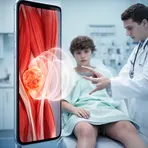
A rare muscle cancer that grows quickly and often affects teenagers and young adults

- Specialized
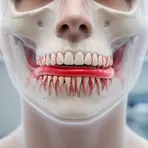
A blood vessel that runs through the lower jaw and carries blood to the lower teeth

- Specialized
A consonant sound made with the tongue just behind the top front teeth, like the 'sh' in shoe

Surface Forms
Morphology
alveolar = alveolus (opaque) = alveol + ar
The base word 'alveolus' is a specialized scientific term not familiar or transparent to most learners.
Etymology
Alveolar comes from the Latin word alveolus, which means 'small hollow'. So, in the lungs it refers to the tiny hollow air sacs where air and blood meet.