
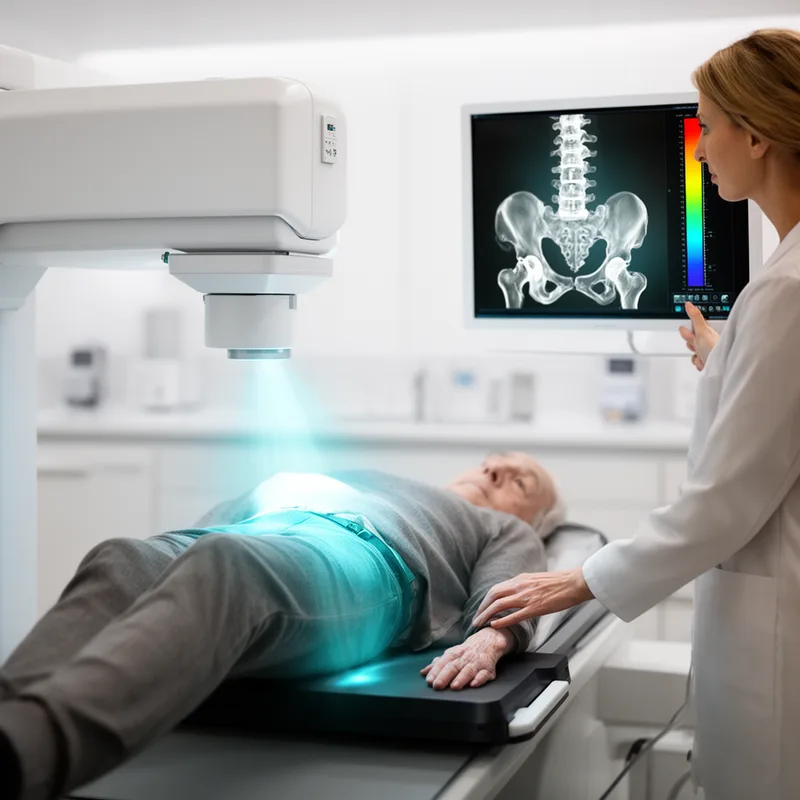
absorptiometry


 1
9.8
- noun
- /æbˌzɔːrpʃiˈɒmətri/
- Specialized
- The development of dual-energy x-ray absorptiometry (DEXA) scanning 10 years later provided a more accurate way to assess body composition.
- ray absorptiometry
- X-ray absorptiometry
- energy absorptiometry
Examples
-
Bone density scanning, using dual energy absorptiometry (DXA) scan of the axial skeleton (using the lumbar spine and hip), is considered to be the 'gold standard' of diagnostic techniques.
Academic text (2015) -
The children's body composition was assessed using the equipment DEXA (Dual Energy X-ray absorptiometry).
Blog text (31) -
Dual Energy X-ray Absorptiometry (DEXA) is fast replacing these techniques as the preferred standard.
Academic text (2006) -
PHOTO (COLOR): Dual energy X-ray absorptiometry (DXA) is used to measure bone density and body composition.
Academic text (2004) -
The gold standard for measuring BMD is the DXA, or dual x-ray absorptiometry (Kleerekoper, 1998).
Academic text (2004) -
These longer evaluations include a dual energy X-ray absorptiometry (DXA) scan to measure the children's bone density and body composition.
Academic text (2004) -
Total-body and lumbar spine bone-mineral densities were measured using dual-energy X-ray absorptiometry (DXA).
Academic text (2006) -
Bone mineral density can be assessed by either X-ray technology (dual energy X-ray absorptiometry DEXA) or ultrasound-based systems (Blake, Wahner, & Fogelman, 1999).
Academic text (2003) -
The doctor used absorptiometry to evaluate the patient's bone density during the check-up.
-
To diagnose osteoporosis, physicians often recommend absorptiometry tests to measure bone health.
Synonyms
 1
9.8
A way of measuring how much light a material blocks by shining light through it
 1
7.7
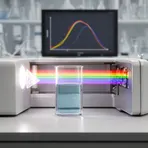
A method to measure how much light a substance absorbs at different colors
Surface Forms
Morphology
absorptiometry = absorption (semi-transparent) = absorb + metry
While 'absorption' and 'metry' are clear components, the specific scientific application is not immediately obvious to all learners.
Etymology
Absorptiometry starts with absorb ('to take in') and ends with -metry ('measure'), the same measuring part you see in thermometer. So absorptiometry is a way to measure how much something 'takes in' or 'soaks up', which is why doctors use it to check things like bone density.