
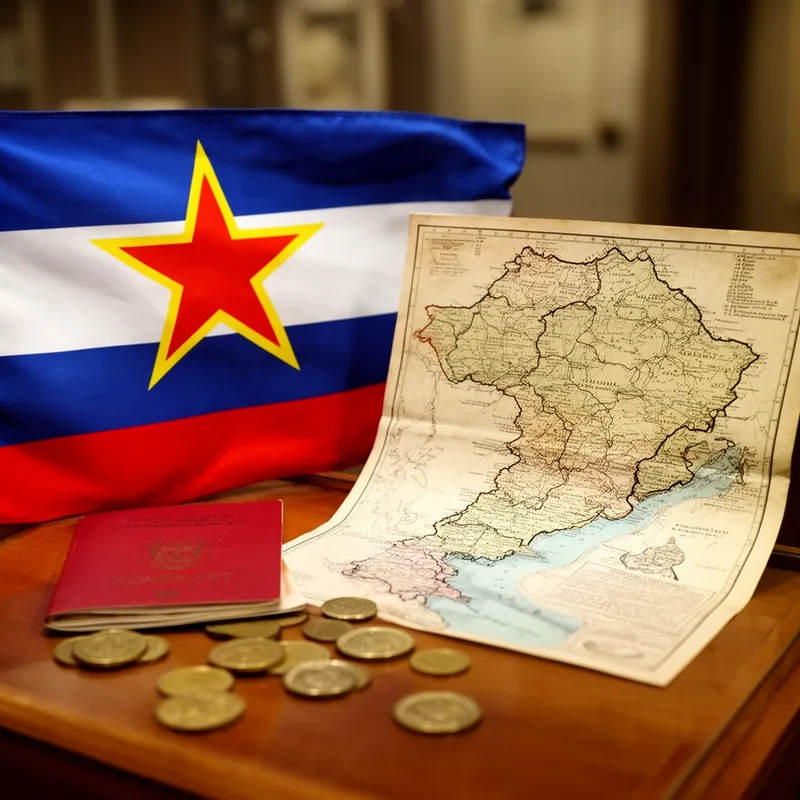
Yugoslavian
 7
4.8
7
4.8

- adjective
- /ˌjuːɡəˈslɑːviən/
- The Yugoslavian languages include Serbian, Croatian, and Bosnian.
- Yugoslavian republics
Loading YouTube…
Watch on YouTubeDo you do these Yugoslavian movies you've made?
- Do you do these Yugoslavian movies you've made?
Examples
-
And NATO's violation of Yugoslavian sovereignty in 1999 now enables a devastating Russian response.
Blog text (24) -
During the period from 1992 to 1995, as the world community watched and listened with horror to tales of atrocities and wanton destruction in the former Yugoslavian republic, Russia's leaders struggled to establish their country's policy toward the war.
Academic text (1998) -
But it is the duty of the Yugoslavian police.
-
I should say at the outset that I am writing about Eastern Europe from a Yugoslavian perspective.
Academic text (1991) -
However, most national Red Cross societies have ignored the Yugoslavian government's appeals for help.
Academic text (2000) -
The challenge, of course, is to devise a policy that will help shepherd the troubled regions of the world from Yugoslavian conditions to Swiss conditions.
Academic text (1992) -
However, in comparison with Yugoslavian elite soccer players, twice as many Greek advanced ex-athletes neglected their weight control.
Academic text (1991) -
Mladen Lubbeck, the Yugoslavian statesman.
-
The Yugoslavian consul.
-
Contrasting Haitian, Yugoslavian, and Russian emigration would be an appropriate pursuit.
Academic text (1993)
Synonyms
 43
6.6
43
6.6
Relating to the former country Yugoslavia, its people, or culture
Compounds
Surface Forms
Morphology
Yugoslavian = Yugoslavia (transparent) = Yugoslavia + ian
The adjective/demonym is formed in the regular way from the country name 'Yugoslavia' with the familiar suffix '-ian', so the relation is clear to learners.
Etymology
Yugoslavian comes from the country name Yugoslavia, which combines jug 'south' and Slav 'Slavs'. That name meant 'land of the South Slavs', so Yugoslavian describes people, languages, or things from that former country.