
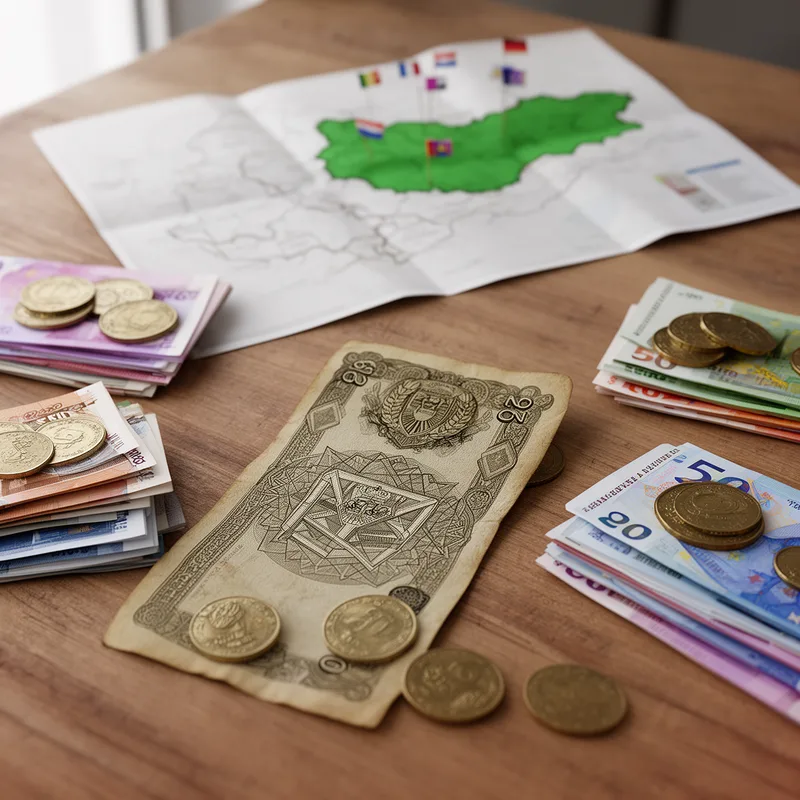
Yugoslavian dinar
- noun
- /juˈɡoʊsləviən dɪˈnɑr/
- Archaic
- After the breakup of Yugoslavia, the Yugoslavian dinar was replaced by new national currencies.
Examples
-
When traveling through the Balkans in the 1980s, you needed to exchange your dollars for Yugoslavian dinar.
-
I have an old Yugoslavian dinar banknote as a souvenir from my trip.
-
The price was listed in Yugoslavian dinar.
-
I exchanged my Yugoslavian dinars for euros.
-
I have an old Yugoslavian dinar banknote as a souvenir from my trip.
-
After the breakup of Yugoslavia, the Yugoslavian dinar was replaced by new national currencies.
-
When traveling through the Balkans in the 1980s, you needed to exchange your dollars for Yugoslavian dinar.
Synonyms

 123
5.8
123
5.8

The basic unit of money used in several countries like Algeria and Iraq
Surface Forms
Morphology
The phrase combines the adjective 'Yugoslavian' (of or relating to Yugoslavia) with 'dinar' (a unit of currency), so its meaning 'the currency of Yugoslavia' is directly and compositionally derivable from the parts. This is a regular noun phrase pattern common across languages, so a B1 learner who knows both words would readily understand it.
Etymology
Yugoslavian dinar was the name for the money used in Yugoslavia. The word dinar was already a common name for coins in many countries, so imagine handing a small coin called a dinar to buy bread in a busy market. That simple image helps you remember it meant the country's 'money' and now refers to the old currency no longer used.