
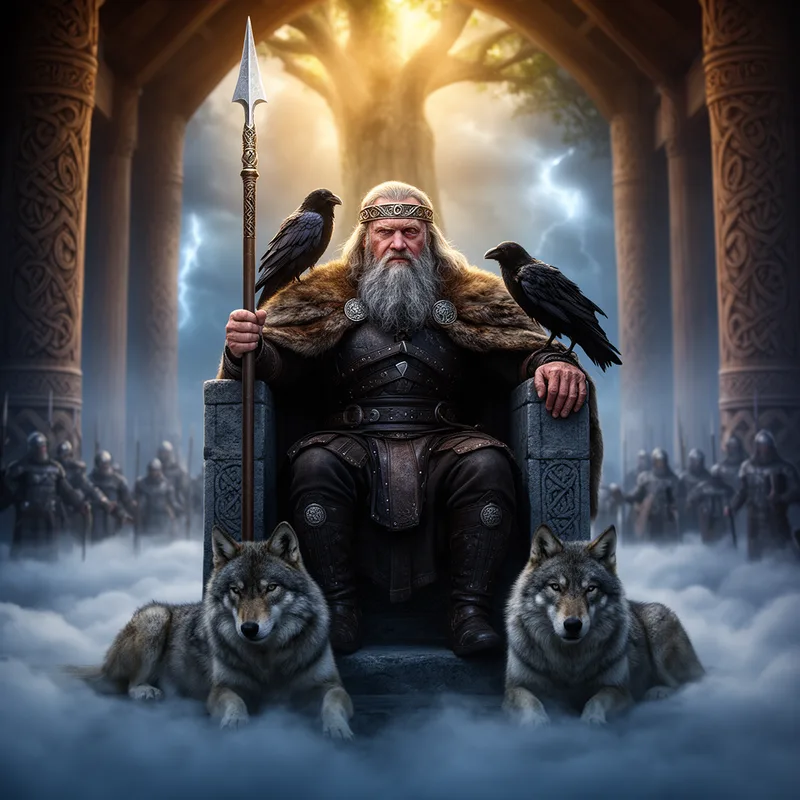
Wotan
 4
9.9
4
9.9

- proper noun
- Literature
- The first act of the story takes place on Earth as the children of Odin or Wotan, the siblings, Siegmund and Sieglinde happen to cross one another and fall in love.
- Wotan and Odin
Loading YouTube…
Watch on YouTubeOdin steals or Wotan steals the ring from, from Albaric.
- Odin steals or Wotan steals the ring from, from Albaric.
Examples
-
Odin-Wotan, god of shamans, poets, and warriors, whom we shall discuss further, was said to have conversations seeking knowledge with each of these classes of beings.
Academic text (1990) -
She was the daughter of Wotan, the god of all gods.
-
This is Wotan, our god of war.
-
Do Siegfried, Wotan, and Alberich mean anything to you yet?
Fiction book (1991) -
It's the gods' plan, a course of action, and Wotan sends his daughter Brünnhilde to kill Siegmund.
-
"Wotan, or Odin, was the father of the gods, and his wife, Frigga, was the earth goddess who brought summer, and the god of war, Thor.
Fiction book (1998) -
Wotan is revered as the chief god in many legends and myths, where Wotan represents power and authority.
-
In Teutonic mythology, Wotan symbolizes wisdom and war, guiding heroes to victory.
-
People often celebrate the deeds of Wotan, the god equivalent to Norse Odin, in various festivals.
Synonyms
 84
8.4
84
8.4
The chief god in Norse myths who is linked with war, poetry, and wisdom


 1
9.9
1
9.9
The main god in early English stories, like the Norse god Odin

A main god of old Germanic people like the Norse Odin
Surface Forms
Etymology
Wotan is the German name for the chief god also called Odin or Woden, and it comes from an old German name Wodan that meant 'fury' or 'inspired madness'. That meaning helps explain why Wotan is seen as a powerful, fierce and wild leader of the gods.