
Odin
 84
8.4
84
8.4

- proper noun
- /ˈoʊdɪn/
- Literature
- Many Vikings prayed to Odin before going into battle, seeking his guidance and favor.
- the god Odin
- the Odin cult
- veneration of Odin
Loading YouTube…
Watch on YouTubeWell, I think as the statue of Odin shows, the poetic and the genocidal can coexist.
- Well, I think as the statue of Odin shows, the poetic and the genocidal can coexist.
Examples
-
And further, the horse with eight legs is Odin's horse, the famous Sleipnir.
Academic text (1999) -
The first story tells of Odin's discovering the secret, spiritual language of nature.
Academic text (1990) -
I give thanks to Odin for your safe return.
-
What are the lessons of these Odin stories for our European, Western consciousness today?
Academic text (1990) -
In myth, Odin had the power to change himself into whatever shape he wished.
Academic text (1999) -
- I thought they worshipped Odin.
-
The second story tells how Odin drank from Mimir's deep well of knowledge.
Academic text (1990) -
The warrior God believed that with the help of Odin's mighty steed, there was no plane he could not reach.
-
There are three stories of Odin that illustrate the character of this wandering truth-seeker and magician.
Academic text (1990) -
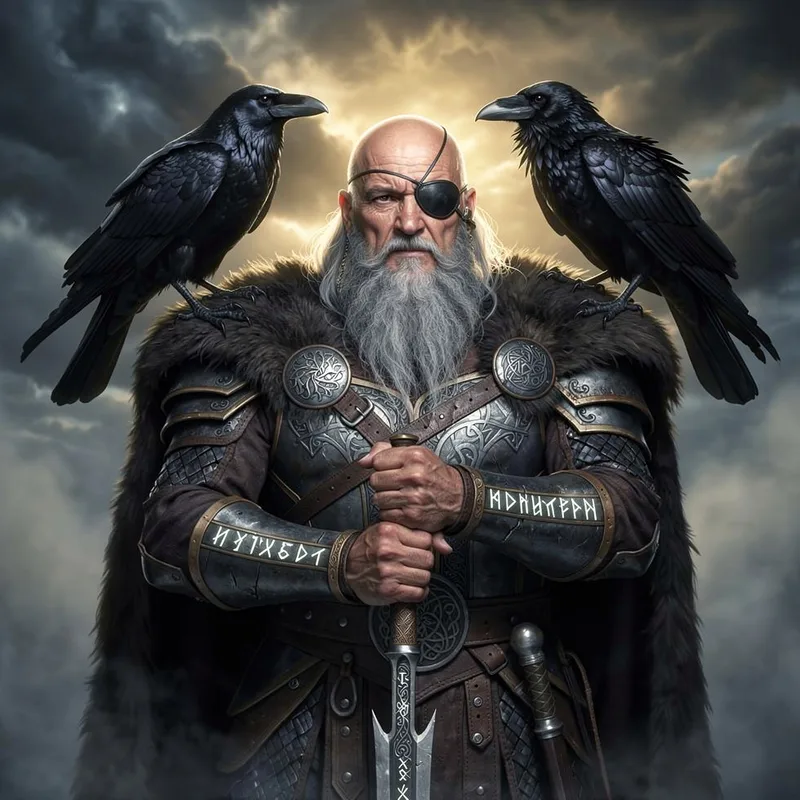
In Norse mythology, Odin is known as the All-Father, the chief god who sacrificed an eye for wisdom.
Synonyms

A main god of old Germanic people like the Norse Odin
Surface Forms
Etymology
Odin comes from Old Norse Óðinn, from the word óðr meaning 'fury' or 'inspiration', so he was seen as a god of both battle rage and poetic wisdom. A helpful way to remember him is that his Old English form Woden gives us the weekday name 'Wednesday', so his name still lives in our week.