
Visigothic


 1
9.9
- adjective
- /ˌvɪzɪˈɡɒθɪk/
- Still, the fifteenth-century unification movement was, he finds, not the first after the destruction of Visigothic power, nor did a national sentiment cease to exist with the independence of those attempts at unity.
Examples
-
To Buckle, the Visigoths are so weak that the clerics gain the ascendancy, "for, late in the sixth century, the Latin clergy converted their Visigothic masters" (2:9).
Academic text (2004) -
Reading Buckle may have helped Ortega link the Catalan and Basque separatism of his times to the course of all Spanish history, from the Visigothic invasion to the 1920s.
Academic text (2004) -
This other Visigothic queen of one of his brothers asks for the hand of her sister Galswynth.
-
Late in the sixth century, the Latin-speaking clergy converted their Visigothic masters.
Academic text (2004) -
Yet his tracing of this deficiency to Visigothic roots obeys the influence of Buckle.
Academic text (2004) -
They conquered the Visigothic Kingdom by 718 when they crossed the Pyrenees.
Blog text (16) -
Unlike the feminized white nationalists that plague the movement today, in honor of what my Visigothic ancestors did with the miscegenators when they ruled Spain, after the anti-white system collapses, I look forward to imitating their sense of justice in cases of more recent sins against the Holy Ghost.
Blog text (24) -
By associating the king's name with eminent ancestors, many of them specifically "Spanish" Visigothic kings or members of the Habsburg house, Bances dramatizes a symbolic heritage and impresses upon his royal audience the importance of maintaining the integrity of its symbols.
Academic text (1998) -
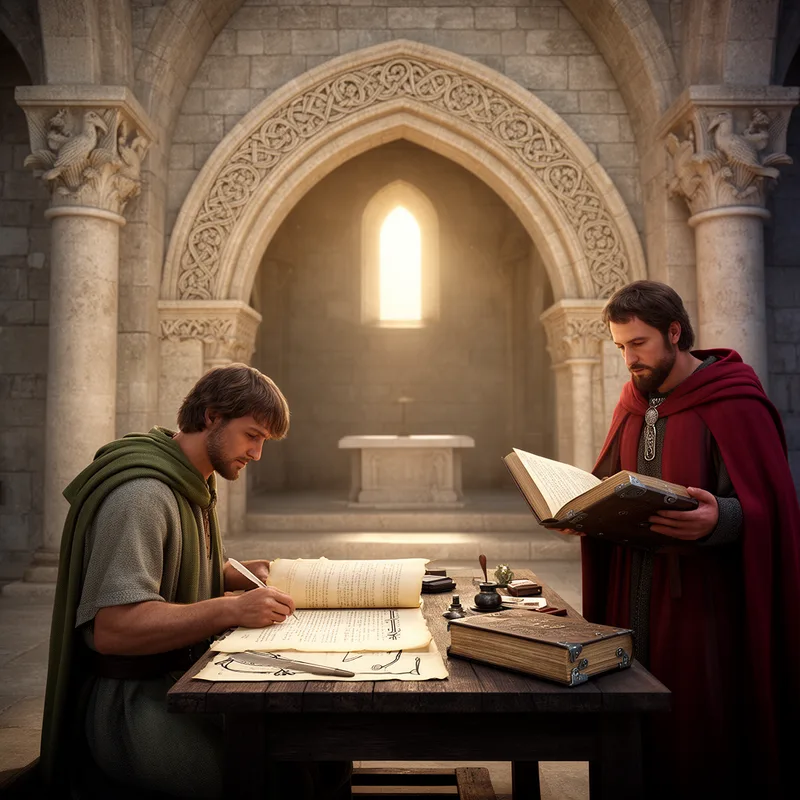
The Visigothic architecture of the church features intricate designs that reflect the culture of the time.
-
Many artifacts from the Visigothic era provide insight into the daily lives of these early Germanic people.
Surface Forms
Morphology
Etymology
Visigothic comes from Visigoth, a name made from old words meaning 'west' and 'Goth'. So Visigothic describes things that belong to that western Gothic people, like their art, law, or buildings.