
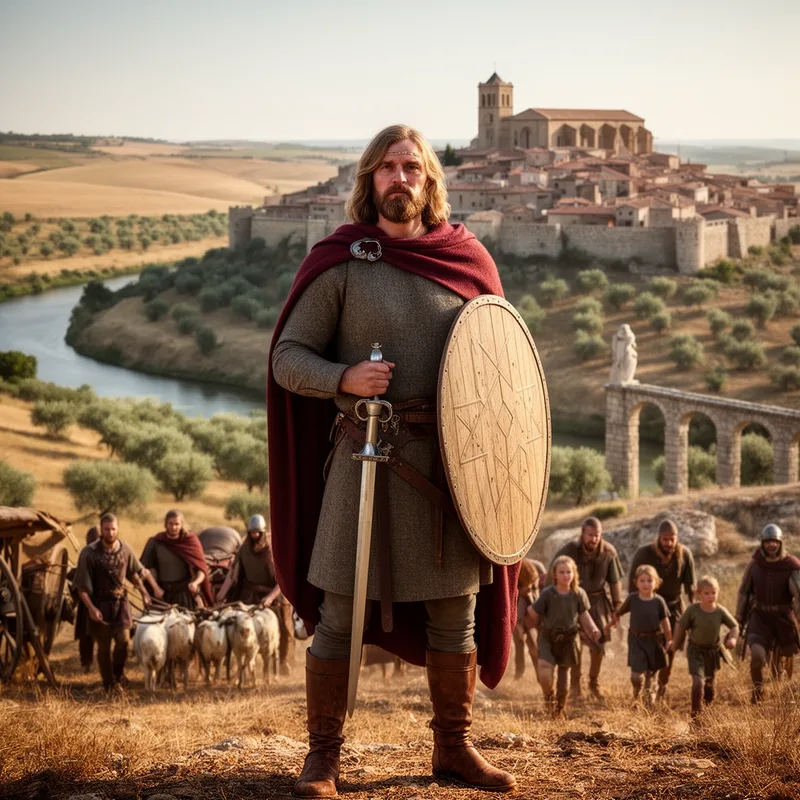
Visigoth
 3
9.9

- proper noun
- /ˈvɪzɪˌɡɔθ/
- You know, EG all Visigoths have some sort of biological thing in common.
Loading YouTube…
Watch on YouTubeThe, the Visigoths are in Spain, the Franks are north.
- The, the Visigoths are in Spain, the Franks are north.
- He was more than just the king of the Franks, because he now ruled over Barbarians, Avars, Visigoths, Lombards.
Examples
-
Among the most powerful were a Germanic people known as Goths, who were composed of two tribal groups, the Visigoths and Ostrogoths.
-
The, the Visigoths are in Spain, the Franks are north.
-
Available historical documents argue that the antique period was fairly peaceful except for a single Visigoth invasion.
Blog text (3) -
And whence derived this Visigoth's permission?
Fiction book (1990) -
Christ, he's a Visigoth.
-
Theodoric and the Visigoths held the right wing and dismounted, forming a shield wall with Archers in the second line.
-
And then we don't have to talk about the Huns and the Visigoths or the Roman army or the, you know, the armies of the the Aztecs or wherever around the world.
-
Alaric the Visigoth famously led his people in the sack of Rome in 410 AD.
-
The Visigoths were instrumental in the fall of the Western Roman Empire during the early Middle Ages.
-
Many historical accounts focus on the Visigoths' contributions to the cultural development of medieval Spain.
Synonyms
A person who belonged to the Visigoths, an early Germanic people in Europe
Surface Forms
Etymology
Visigoth comes from the Gothic part Wesi meaning 'west' joined with Goth, so the name means 'western Goth'. This explains why Visigoth refers to the Germanic people who moved into and settled parts of western Europe, especially in Spain.