
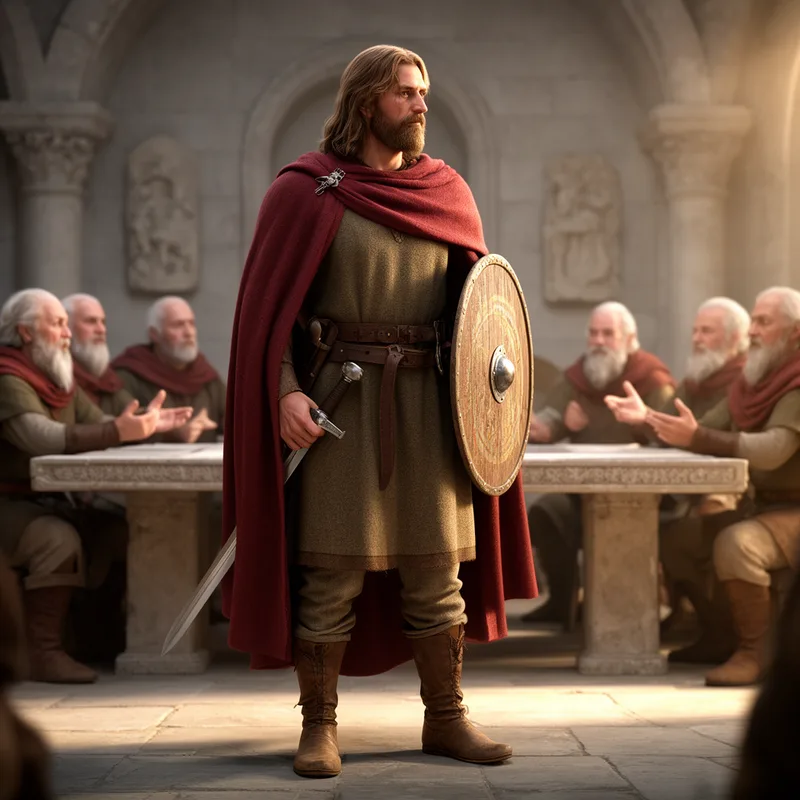
Visigothic
- noun
- /ˌvɪzɪˈɡɔθɪk/
- Archaeologists discovered artifacts from a Visigothic settlement in Spain.
Examples
-
The Visigothic tribes played a significant role in the fall of the Roman Empire.
-
The Visigothic played a significant role in the fall of the Western Roman Empire.
-
A Visigothic stood at the council, listening carefully to the elders' debate.
-
Many Visigothic artifacts have been discovered in Spain.
-
The Visigothic rulers established a new kingdom after the fall of the Roman Empire.
-
In Visigothic society, art and architecture reflected their Germanic heritage.
-
Many ancient texts describe the conflicts between the Romans and the Visigothic tribes.
Synonyms
 3
9.9

A member of a Germanic people who settled in parts of Europe and formed a kingdom in Spain
Surface Forms
Morphology
Etymology
Visigothic comes from Visigoth, a name made from old words meaning 'west' and 'Goth'. So a Visigothic was a person from that western Gothic people.