
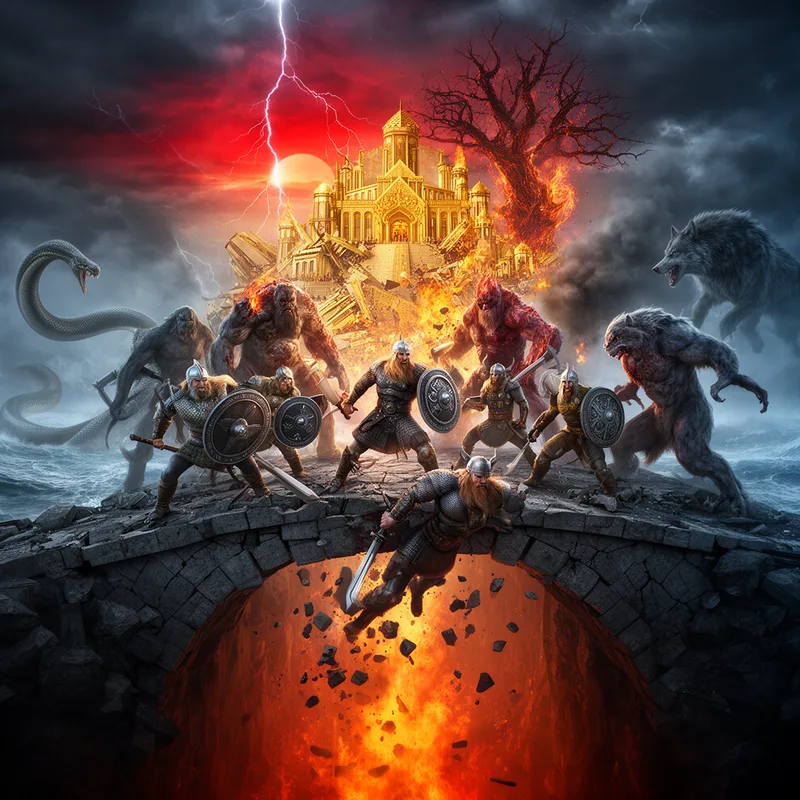
Twilight of the Gods


 1
9.9
1
9.9
- noun
- /ˈtwaɪlaɪt əv ðə ɡɑdz/
- Literature
- In Norse mythology, the Twilight of the Gods marks the end of the world.
Loading YouTube…
Watch on YouTubeIt's not happening instantaneously in a great twilight of the gods.
- It's not happening instantaneously in a great twilight of the gods.
Examples
-
The ancient legend of the Twilight of the Gods has inspired countless works of art and literature.
-
Many scholars have compared the story of the Twilight of the Gods to other apocalyptic myths.
-
Wagner's famous opera, Twilight of the Gods, dramatizes the downfall of the Norse deities.
-
The Twilight of the Gods is fascinating.
-
In Norse mythology, the Twilight of the Gods is the prophecy of the final battle where gods and giants battle, leading to their destruction.
-
Many stories in Norse mythology revolve around the Twilight of the Gods and the themes of fate and inevitability.
-
The Twilight of the Gods symbolizes the end of an era and the worldview of Norse culture regarding destiny and destruction.
Synonyms
 8
9.9
8
9.9
A final battle in Norse myths that destroys the gods and ends the world
 1
9.9
1
9.9
A final great destruction that ends the world or a whole system
Surface Forms
Morphology
The phrase combines 'twilight' (a state of decline or approaching end) with 'of the gods', so its basic sense — the decline or end of the gods — is directly derivable from the constituent meanings. Although the term refers specifically to the Norse myth Ragnarök (cultural knowledge a learner may lack), the compositional meaning is transparent and cross-linguistically accessible, so a B1 learner who knows the words would grasp the general sense.
Etymology
Twilight of the Gods comes from old Norse stories about a 'final battle' when many gods die and the world grows dark. The word 'twilight' gives the picture of the last light going out as the gods fall, so the phrase now means 'the end' or a great downfall of powerful people or things.