

Ragnarok
 8
9.9
8
9.9

- noun
- /ˈræɡnəˌrɔk/
- Literature
- The myth of Ragnarok tells about the final battle between gods and giants (Davidson 1993, 74).
- Ragnarok, the final
- day of Ragnarok
- Ragnarok, the gods
Loading YouTube…
Watch on YouTubeInstead, he winds up stuck with these Norse gods leading up to Ragnarok.
- Instead, he winds up stuck with these Norse gods leading up to Ragnarok.
Examples
-
Many fear that the signs are pointing to Ragnarok, marking the end of all existence.
-
And our people shall be grateful till the Ragnarok.
-
But Ragnarok has already begun.
-
The tree, the axis mundi, does not fall during Ragnarok.
Academic text (2000) -
Now that Odin and Frigg have lost their son, the threat of Ragnarok feels so much more real.
Academic text (2018) -
The Old Norse term for this event is "Ragnarök," meaning the "final destiny of the gods"; on Ragnarok, see Simek (2007, 259-60).
Academic text (2018) -
In Norse mythology, Ragnarok is described as the final battle that ends the world.
-
The ancient texts predict that Ragnarok will bring about the destruction of the gods.
Synonyms
 134
8.6
134
8.6
A great disaster that destroys the world, often caused by a divine power
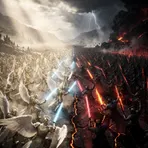 50
8.4
50
8.4
The place in the Bible where the final battle between good and evil will happen
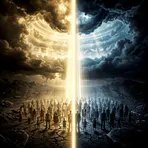 50
7.9
50
7.9
The final event when God judges all people and decides their eternal fate
 23
7.5
23
7.5
The last day when the world ends or everything is destroyed
 1
9.9
1
9.9
A final great destruction that ends the world or a whole system


 1
9.9
1
9.9
A Norse myth about the final battle that destroys the gods
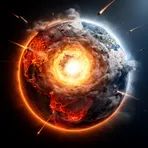
An event that kills most people or destroys life on Earth
Surface Forms
Etymology
The word Ragnarok comes from old Norse parts ragna- meaning 'of the gods' and -rök meaning 'fate' or 'final events'. So Ragnarok literally means the 'fate of the gods', which is why it names the prophesied final battle that brings the end of the world, and a helpful way to picture it is as the 'twilight of the gods'.