

Turanian
 1
9.9
1
9.9

- adjective
- /tʊˈreɪniən/
- Archaic
- Many researchers focus on the Turanian civilization to uncover details about early Central Asian societies.
Examples
-
Linguists have studied the Turanian languages to understand the connections between ancient cultures.
-
And the hint came from the old name of fairies, 'the little people,' and the very probable belief that they represent a tradition of the prehistoric Turanian inhabitants.
Blog text (19) -
The Turanian peoples spoke languages that were once grouped together in historical studies.
Synonyms
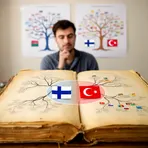
An old idea that Finnish and Turkish belong to the same language group
Surface Forms
Morphology
Turanian = Turan + ian (transparent) = Turan + ian
Formed by the productive suffix '-ian' attached to the proper noun 'Turan', meaning directly 'relating to Turan'; formation is morphologically regular though the term is specialized.
Etymology
Turanian comes from Turan, a name for a region in Central Asia found in old Persian stories. In the 1800s scholars used that name to group certain Central Asian peoples and languages, so Turanian today describes something relating to those historical peoples or their languages.