
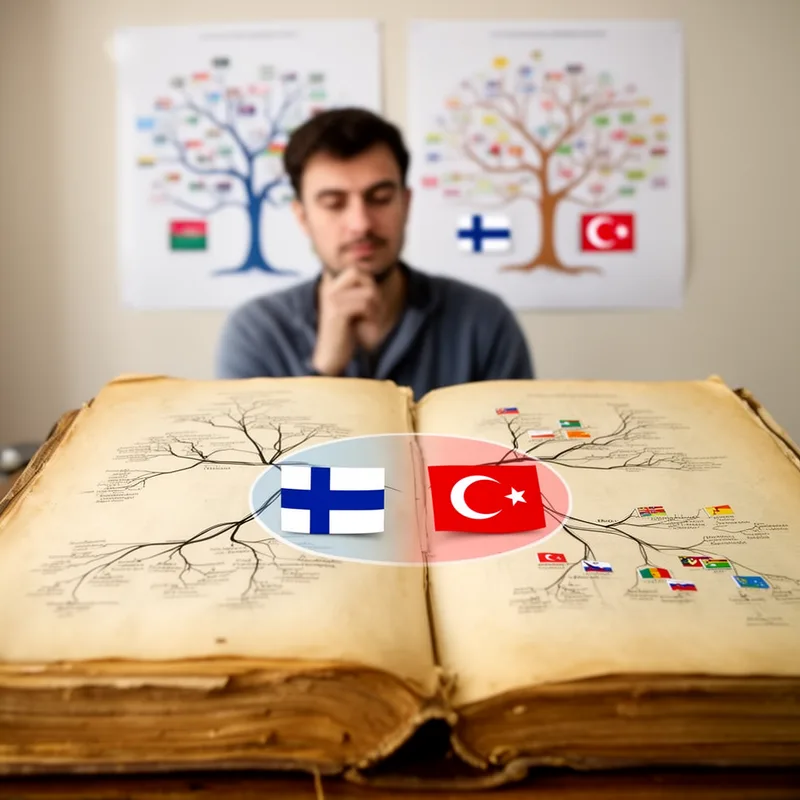
Ural-Altaic
- noun
- /ˈjʊrəl ælˈteɪɪk/
- Archaic
- Scholars once grouped Finnish and Turkish together under the Ural-Altaic languages, but this classification is controversial today.
Examples
-
The theory that Turkic and Finno-Ugric languages are part of the Ural-Altaic family is now largely rejected by linguists.
-
Many older linguistic textbooks reference the Ural-Altaic hypothesis, despite modern doubts about its validity.
-
The Ural-Altaic language family includes many indigenous languages.
-
Linguists have debated the validity of the Ural-Altaic hypothesis.
-
Many linguists once believed in the Ural-Altaic language family, which includes languages like Finnish and Turkish.
-
The concept of the Ural-Altaic group of languages has been a subject of debate among language scholars for decades.
-
Textbooks on linguistics often discuss the Ural-Altaic languages, even though this theory is now mostly discredited.
Synonyms

 1
9.9
1
9.9

Of or about peoples and languages of Central Asia in older studies
Surface Forms
Etymology
Ural-Altaic comes from two place names, Ural and Altaic, which point to the Ural Mountains and the Altai region, so the name was used for languages from those areas. It was a label for the idea that many indigenous languages of Russia and Central Asia belonged together, but today most experts reject that grouping, so the name mainly shows a geographic link rather than a settled language family.