

Tunicata
- noun
- /ˌtjuːnɪˈkɑːtə/
- Specialized
- Did you know that Tunicata are also known as sea squirts?
Examples
-
Tunicata are marine animals that have a sac-like body and can be found in various ocean habitats.
-
The tough covering that protects Tunicata is what gives these creatures their name.
-
Tunicata are found in oceans worldwide, often attached to rocks or floating freely.
-
Many marine biologists study Tunicata for their unique life cycles and evolutionary traits.
-
The Tunicata subphylum includes various marine species.
-
Many researchers focus on Tunicata to learn more about their complex life cycles and adaptations.
-
The outer covering of Tunicata is tough, providing protection against predators in their environment.
Synonyms


 1
9.9
1
9.9
A sea animal with a soft saclike body that often filters food from water
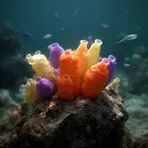
Sea animals with a sac-like body and a tough outer covering, like sea squirts

Sea animals that have bag-shaped bodies and a tough outer covering and that filter water to feed, like sea squirts

A group of sea animals like sea squirts with a bag-like body and a tail in the young stage
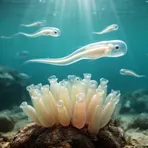
A group of sea animals like sea squirts with a sac-like body and a backbone-like rod when young
Surface Forms
Etymology
The word Tunicata comes from the Latin tunica, which means 'tunic' or 'garment', and it is the same root as the English word tunic. So these sea animals are named for the tough outer 'tunic' or coat that covers their bag-like bodies.