

Tragopogon porrifolius
- noun
- Specialized
- Tragopogon porrifolius is often cultivated for its edible root, which has a mild flavor reminiscent of oysters.
Examples
-
The long, slender root of Tragopogon porrifolius can be roasted or boiled and added to soups.
-
Gardeners in the United States sometimes grow Tragopogon porrifolius as a biennial vegetable for its nutritional value.
-
I found Tragopogon porrifolius growing in my garden.
-
Have you ever tasted Tragopogon porrifolius?
-
Tragopogon porrifolius is often cultivated for its edible root, which has a mild flavor reminiscent of oysters.
-
The long, slender root of Tragopogon porrifolius can be roasted or boiled and added to soups.
-
Gardeners in the United States sometimes grow Tragopogon porrifolius as a biennial vegetable for its nutritional value.
Synonyms


 1
9.9
1
9.9
A garden plant that has long white roots and purple flowers

A plant with a long white root that tastes like oysters when cooked
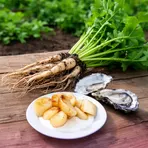
A plant with a root you can eat that tastes like oysters
Surface Forms
Morphology
Tragopogon + porrifolius
This is a Latin scientific binomial (a proper name) rather than a compositional English phrase; its constituents are specialist/Latin terms (one not even in the dictionary) so a B1 learner who ‘knows the words’ would not be able to infer the plant description (Mediterranean biennial with edible root). Botanical names function as arbitrary labels across languages, making the meaning unpredictable from the parts for general learners.
Etymology
Tragopogon porrifolius may get its name from old words meaning goat and beard because its fluffy seed head looks like a goat's beard. It is also called 'oyster plant' or 'salsify' because the long root tastes a little like oysters, so the name helps you remember it is a plant with a fluffy top and an edible, oyster-flavoured root.