

Tilletia caries
- noun
- Specialized
- The presence of Tilletia caries results in kernels turning into black, smelly masses.
Examples
-
Modern seed treatments have greatly reduced the incidence of Tilletia caries in wheat fields.
-
Farmers monitor their crops for signs of Tilletia caries, which can destroy entire wheat harvests.
-
Farmers must be aware of Tilletia caries to protect their wheat crops.
-
The presence of Tilletia caries can lead to significant crop losses.
-
Farmers monitor their crops for signs of Tilletia caries, which can destroy entire wheat harvests.
-
Modern seed treatments have greatly reduced the incidence of Tilletia caries in wheat fields.
-
The presence of Tilletia caries results in kernels turning into black, smelly masses.
Synonyms


 1
9.9
1
9.9
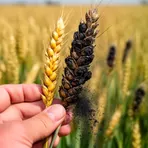
A disease of wheat that replaces grains with bad-smelling spores
 1
9.4
1
9.4
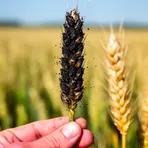
A plant disease that makes black powder on grain plants like wheat
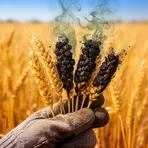
A disease that affects wheat and similar grains, turning grains into dark, smelly masses
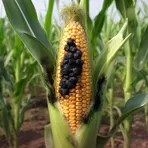
A small living thing that grows on plants and makes black dusty spots often on wheat or corn

A group of fungi that causes smut disease in wheat and other grain crops
Surface Forms
Morphology
The name is a taxonomic binomial combining 'Tilletia' (a genus of smut fungi) with 'caries' (decay), so a learner who knows both constituents can infer it refers to a Tilletia species that causes decay/disease in crops. Binomial Latin names are cross-linguistically used and the meaning (a fungus causing decay in wheat) is derivable from the parts, making it transparent for a learner familiar with the component words.
Etymology
Tilletia caries comes from two parts: the first word Tilletia honors a scientist, and the second word caries is Latin for 'decay'. This gives a clear picture of a fungus that rots wheat kernels into smelly masses of spores, so the name points to the disease that destroys grain.