
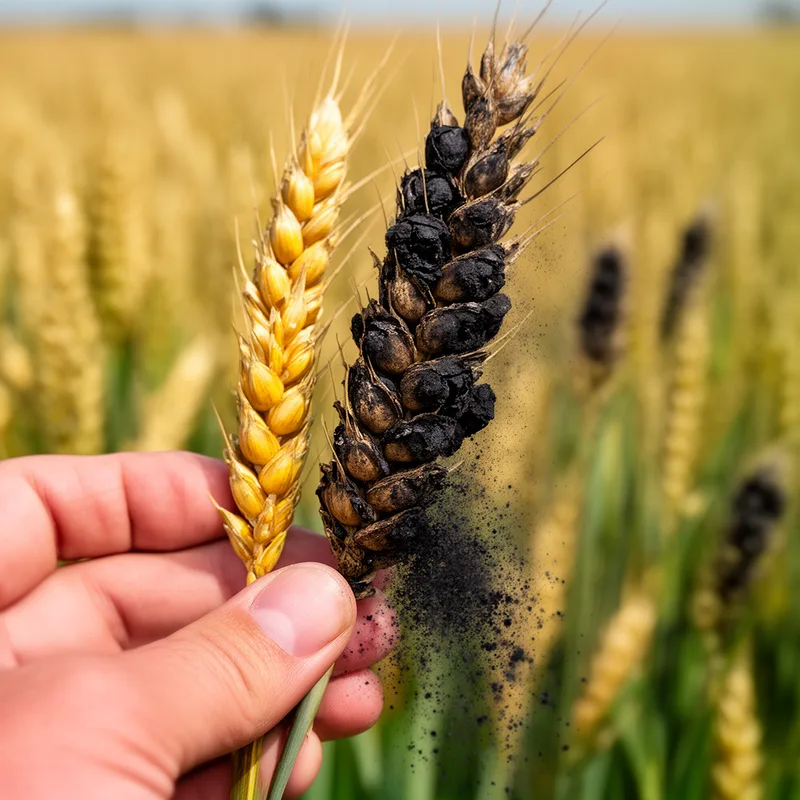
bunt


 1
9.9
1
9.9
- noun
- /bʌnt/
- Specialized
- The new species she described was Tilletia walkeri, or ryegrass bunt.
- Karnal bunt
- bunt fungus
Examples
-
Karnal bunt is a significant threat to wheat crops, causing the grains to rot with foul-smelling spores.
-
When what looked like an outbreak of Karnal bunt disease threatened the U.S. wheat export market in 1996, ARS quickly developed a test to distinguish between it and a comparatively harmless look-alike fungus.
Academic text (2003) -
Such was the case with Karnal bunt.
Academic text (2003) -
Sometimes, a lot of money can be at stake, as in the case of Karnal bunt," says Rossman.
Academic text (2004) -
How about "bunt"?
-
Several outbreaks have occurred in the United States since Karnal bunt was first reported here in 1996, but the last time was in 2001.
Academic text (2006) -
But Castlebury is one of the scientists who described the ryegrass fungus and detailed features that distinguish it from the Karnal bunt fungus.
Academic text (2006) -
For instance, ARS scientists brought clarity to the confusion about the Karnal bunt fungus, Tilletia indica, in the United States in 1996.
Academic text (2004) -
Many countries require either immediate quarantine of wheat exports from areas reporting the presence of Karnal bunt or phytosanitary guarantees that the fungus is not present in a shipment.
Academic text (2006) -
Farmers are concerned about the impact of bunt on their harvest, as it can destroy a large portion of the wheat yield.
Synonyms
A disease that affects wheat and similar grains, turning grains into dark, smelly masses

A fungus that infects wheat and turns grains into black, smelly masses
Surface Forms
Etymology
Bunt for the wheat disease likely comes from a German word meaning 'varied' or 'spotted', because the infected grains are changed into dark, greasy masses that look and smell different, so farmers began to call the sickness a 'bunt'.