
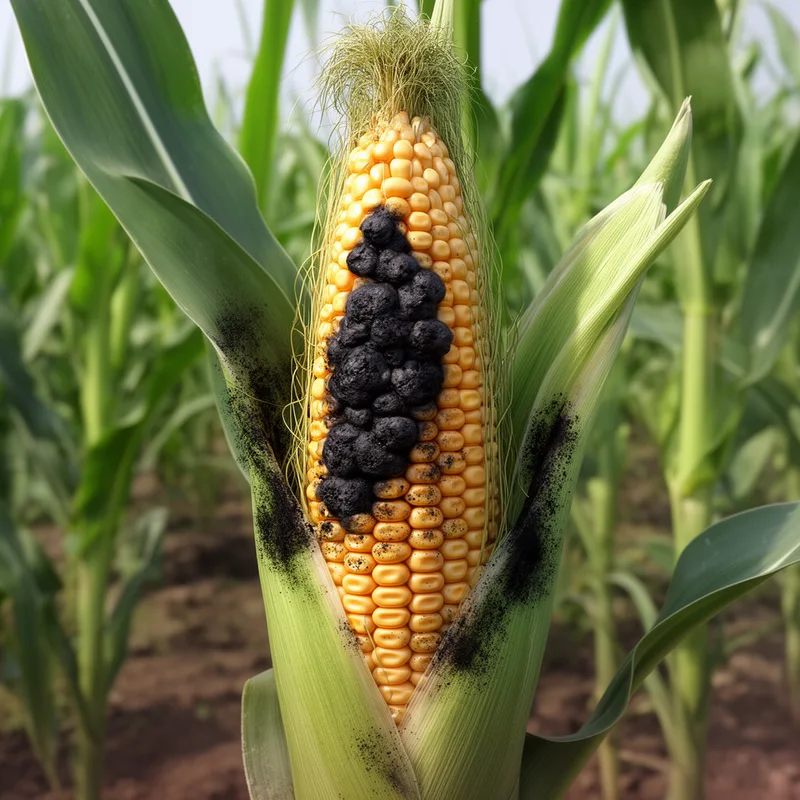
smut fungus
- noun
- /smʌt ˈfʌŋɡəs/
- Specialized
- Researchers are studying the life cycle of smut fungus to develop resistant strains of wheat.
Examples
-
Black powdery spores, a sign of smut fungus, appeared on several stalks in the greenhouse.
-
The smut fungus infected the corn crops last summer.
-
The corn crop was ruined by a smut fungus infection that spread rapidly through the field.
-
Farmers are worried about smut fungi affecting their wheat.
-
The wheat crop was severely affected by smut fungus, leading to significant losses for the farmers.
-
Researchers are studying how smut fungus infects maize plants to develop better resistance techniques.
-
In fields where smut fungus is prevalent, farmers often use fungicides to prevent crop damage.
Synonyms

A group of fungi that make dark, dusty growth on cereal crops like wheat

A group of fungi that causes smut disease in wheat and other grain crops

A fungus that infects wheat and turns grains into black, smelly masses

A fungus that infects grasses and causes disease in cereal crops

A fungus that infects corn or sorghum heads and makes dark powdery spores

A fungus that infects grasses and crop plants

A type of fungus that causes disease in crops such as rice and wheat

A fungus that causes a green disease in rice plants
Surface Forms
Morphology
The meaning is directly derived from combining 'smut' (a fungal disease producing black powdery spores) with 'fungus' (an organism), so it denotes a fungus that causes smut. This simple noun-noun compositional pattern is common and predictable, so a B1 learner who knows both constituents should be able to infer the MWE's meaning.
Etymology
Smut fungus comes from the black, dusty spores these fungi leave on plants; the old word smut meant a 'black stain', so infected grain looked covered in dirt. That's why smut fungus means a fungus that makes black, powdery patches and damages cereal crops.

