

Taiwanese
 20
3.3

- adjective
- /taɪwəˈniːz/
- From the very beginning, Taiwanese society was derived from the Chinese cultural tradition.
- Taiwanese students
- Taiwanese government
- Taiwanese culture
Loading YouTube…
Watch on YouTubeAnd, and it, it sort of revolves around this young kid growing up with Taiwanese American parents.
- And, and it, it sort of revolves around this young kid growing up with Taiwanese American parents.
- But yeah, I, you know, I think my mannerisms are more Taiwanese.
- officials to Taiwan, we should allow Taiwanese officials to visit the United States for diplomatic meetings.
- So he's a Taiwanese businessman with a huge amount of his business in China.
- It's like a whole thing like Singaporean TV and Taiwanese TV, Like I'm like familiar with the stars of that area of the world now because I love what they do.
Examples
-
Compared with Western literature, however, little is known about gender and the reading practices of Taiwanese students.
Academic text (2012) -
Domestic political trends in mainland China will have an impact on the Taiwanese people's attitude toward unification.
Academic text (1999) -
And, you know, if I was Taiwanese, I'd be worried about China.
-
I miss the Taiwanese sugar apples.
-
By March 1988, there were 120 plants established by Taiwanese investors alone.
Academic text (1990) -
You sure you don't want to try some delicious Taiwanese food before you go?
-
"Clearly, online gaming has become a major leisure activity for Taiwanese teenagers.
Academic text (2008) -
The death of Chiang Ching-kuo opened a new era in Taiwanese politics.
Academic text (1999) -
The Taiwanese government has released a statement... saying that any movement by the Chinese navy into the Taiwan Strait... would be considered an act of war.
-
Lots of people in the city enjoy delicious Taiwanese dishes like beef noodle soup and bubble tea.
Synonyms

 1
8.9
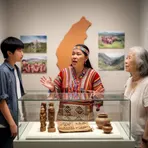
Relating to Taiwan, its people, or their languages
Compounds
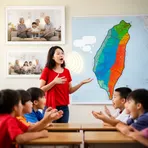
A Chinese language spoken mainly in Taiwan and Fujian, also called Hokkien or Minnan
Surface Forms
Morphology
Etymology
Taiwanese comes from the island name Taiwan, which probably comes from an old local word 'Tayouan' meaning 'people of the bay'. The ending -ese is the same as in Chinese and Japanese, so Taiwanese means 'relating to Taiwan'.