

Sinapis alba
- noun
- Specialized
- The seeds of Sinapis alba are used to produce table mustard.
Examples
-
The seeds of Sinapis alba are commonly used in cooking.
-
Farmers harvest Sinapis alba mainly in late summer.
-
Sinapis alba is widely grown in Europe for its flavorful seeds.
-
Many chefs prefer Sinapis alba for making homemade mustard.
-
Farmers cultivate Sinapis alba in fields to harvest its pungent seeds for mustard.
-
The seeds of Sinapis alba are ground to create a popular condiment for sandwiches.
-
Many recipes call for Sinapis alba seeds for their distinct flavor in sauces.
Synonyms

A plant grown for small seeds that are ground to make a spicy sauce and oil
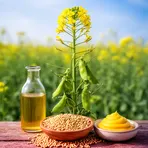
A plant with spicy seeds used to make mustard and cooking oil
Surface Forms
Morphology
Sinapis + alba
This is a Latin binomial: 'Sinapis' identifies the mustard genus, so part of the meaning (that it is a mustard-related plant) is signalled by the first element. However 'alba' is a Latin epithet (meaning ‘white’) and is not a productive English word for most learners, so the exact species meaning ('white/yellow mustard') is not reliably derivable by an average B1 learner without botanical or Latin knowledge.
Etymology
Sinapis alba comes from Latin words: sinapis meant mustard and alba meant 'white', because the plant has pale seeds and flowers. That's why the name is used for the white or yellow mustard plant whose seeds make table mustard and mustard oil.

