

white mustard
- noun
- /waɪt ˈmʌstərd/
- Specialized
- The pungent seeds of white mustard are commonly ground to make table mustard.
Examples
-
Traditional recipes sometimes call for white mustard seeds to enhance the flavor of pickles.
-
Do you prefer white mustard or yellow mustard?
-
Farmers often grow white mustard as a cover crop to improve soil quality.
-
I love adding white mustard to my sandwiches.
-
The pungent seeds of white mustard are commonly ground to make table mustard.
-
Farmers often grow white mustard as a cover crop to improve soil quality.
-
Traditional recipes sometimes call for white mustard seeds to enhance the flavor of pickles.
Synonyms

A plant grown for its small seeds used to make mustard and oil
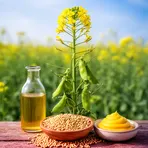
A plant with spicy seeds used to make mustard and cooking oil
How Pungent


Surface Forms
Morphology
This is a straightforward color + noun compound: 'white' labels a variety or type of 'mustard', so a learner who knows both words will infer it denotes a pale/white variety of the mustard plant (Sinapis alba). Color–noun naming for plant/food varieties is a common, compositional pattern cross-linguistically, making the meaning predictable from the constituents.
Etymology
White mustard comes from the plant's pale flowers and light-coloured seeds, so the word white marked it as the lighter kind of mustard plant. People grow it for those strong seeds, which are ground to make the table 'mustard' and mustard oil.