
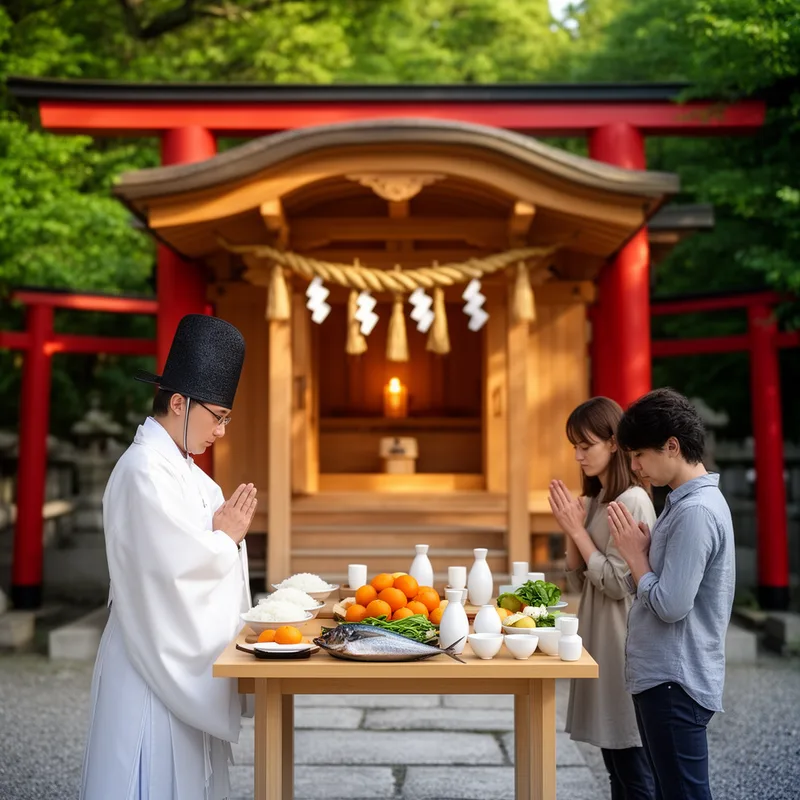
Shintoist


 1
8.7
- adjective
- /ˈʃɪnˌtoʊɪst/
- The festival celebrated the Shintoist traditions of honoring the spirits of nature.
Examples
-
(The rice cakes represent Izanagi and Izanami, that is, humanity's Shintoist progenitors.)
Academic text (1992) -
In attempting to justify Christianity, Xavier does not challenge Buddhism on theological grounds (nor does he distinguish between Buddhist and Shintoist aspects of Japanese religion), but instead attacks the bonzes.
Academic text (2003) -
Many Shintoist rituals involve purification before entering sacred spaces.
-
The museum showcased artifacts related to the Shintoist beliefs and practices of ancient Japan.
Synonyms
 4
8.9
Relating to the Japanese religion that honors nature spirits and ancestors

Relating to the traditional Japanese religion Shinto and its ceremonies
Surface Forms
Morphology
Shintoist = Shinto (transparent) = Shinto + ist
Formed by the proper noun 'Shinto' plus the productive English suffix '-ist' meaning 'follower of' or 'relating to', which a learner can readily interpret.
Etymology
The word Shintoist comes from the Japanese Shintō, which means 'the way of the gods', with shin meaning 'god' or 'spirit' and tō meaning 'way'. So when something is called Shintoist, it relates to the rituals and beliefs of Shinto.