
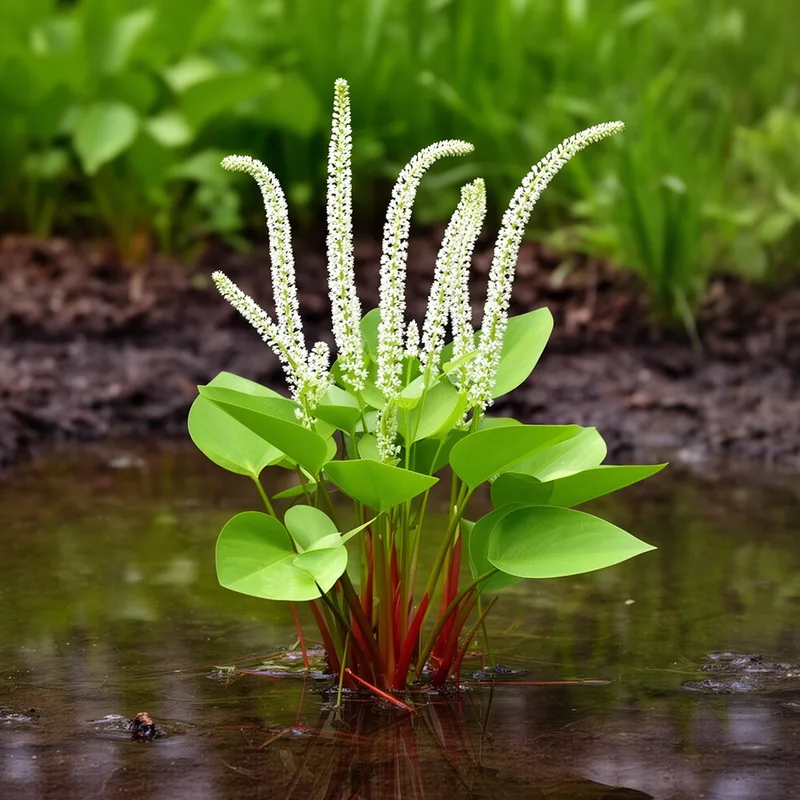
Saururus cernuus
- noun
- /ˈsɔːrʊrəs ˈsɜrnjuəs/
- Specialized
- The long, white flower spikes of Saururus cernuus resemble lizards' tails, giving the plant its common name.
Examples
-
Gardeners often plant Saururus cernuus to add texture and interest to water gardens and ponds.
-
Saururus cernuus thrives in moist, shady wetlands across the southeastern United States.
-
The Saururus cernuus thrives in wetland areas.
-
Have you seen the Saururus cernuus blooming this spring?
-
Saururus cernuus is often found in the marshes where it can flourish in the wet soil.
-
In the spring, the delicate flowers of Saururus cernuus attract various pollinators to the wetland gardens.
-
Many wildlife enthusiasts appreciate Saururus cernuus for its unique appearance in damp environments.
Synonyms

A plant that grows near water with long curved spikes of small white flowers

A plant that grows in wet places with thin stems and small white flowers
How Aquatic


Surface Forms
Morphology
Saururus + cernuus
This is a Latin binomial (scientific) name rather than a compositional English phrase; its meaning (‘a specific wetland herb, lizard's tail’) is a lexicalized taxonomic label not derivable from ordinary English word combination rules. One constituent here is not a standard English word and even knowing 'Saururus' as a plant would not allow a B1 learner to infer the specific referent or common name, so the expression is non‑compositional for learners.
Etymology
Saururus cernuus gets its common name 'lizard's tail' because its long, curled white flower spikes look like a lizard's tail, so the name simply describes the plant's shape.