
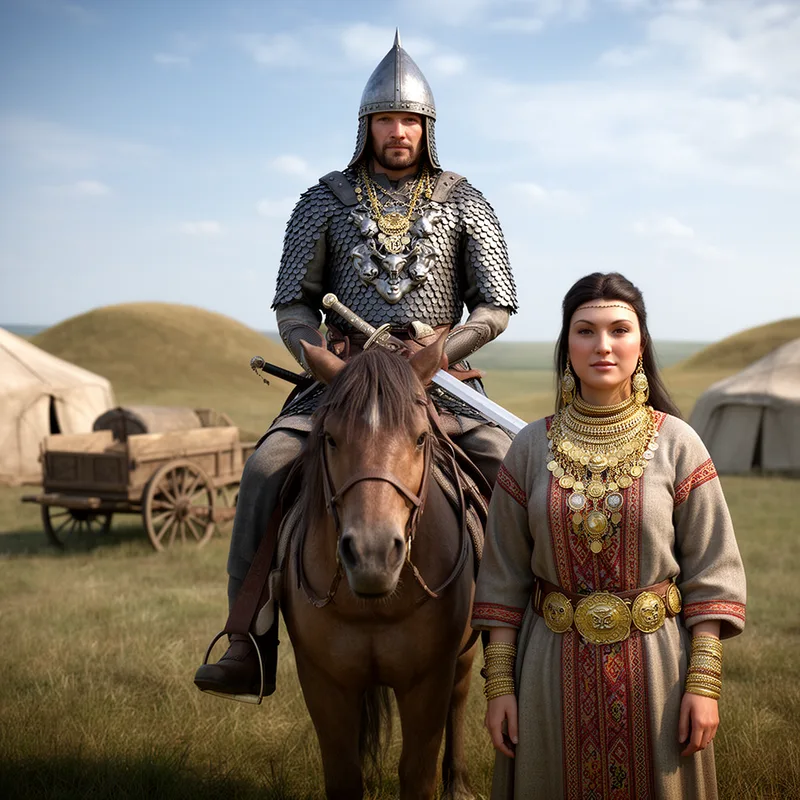
Sarmatian


 1
9.9
- adjective
- /sɑrˈmeɪʃən/
- We have postulated here earlier that Arthur's own Teulu was of the heavy lance-armed Sarmatian/Alani type, known in the late Roman army as cataphractarii.
Examples
-
However, the Romans had settled large numbers of Sarmatian heavy lancers in northern Britain.
Blog text (15) -
And these are the great Sarmatian knights we have heard so much of in Rome.
-
Light Roman infantry and possibly Sarmatian knights.
-
First thing l will do when l get home is find a beautiful Sarmatian woman to wed.
-
Were they shock cavalry of the Sarmatian/Alan type?
Blog text (15) -
A beautiful Sarmatian woman?
-
And when the smoke cleared on the fourth day, the only Sarmatian soldiers left alive were members of the decimated but legendary cavalry.
-
- l am Arthur Castus, Commander of the Sarmatian Knights, sent by Bishop Germanius of Rome.
-
The Sarmatian culture was known for its skilled horsemen and warrior traditions.
-
Many historians study the Sarmatian language to better understand the ancient nomadic tribes of Eastern Europe.
Surface Forms
Morphology
Sarmatian = Sarmat (semi-transparent) = Sarmat + ian
The word is built with the relational suffix -ian on an obscure historical stem, so the structure is clear but the reference requires specialized historical knowledge.
Etymology
Sarmatian comes from the name of an ancient group, the Sarmatians, who lived in Eastern Europe. So when something is called Sarmatian, it means it is 'connected to' those people or their culture, much like 'Roman' means 'from Rome'.