
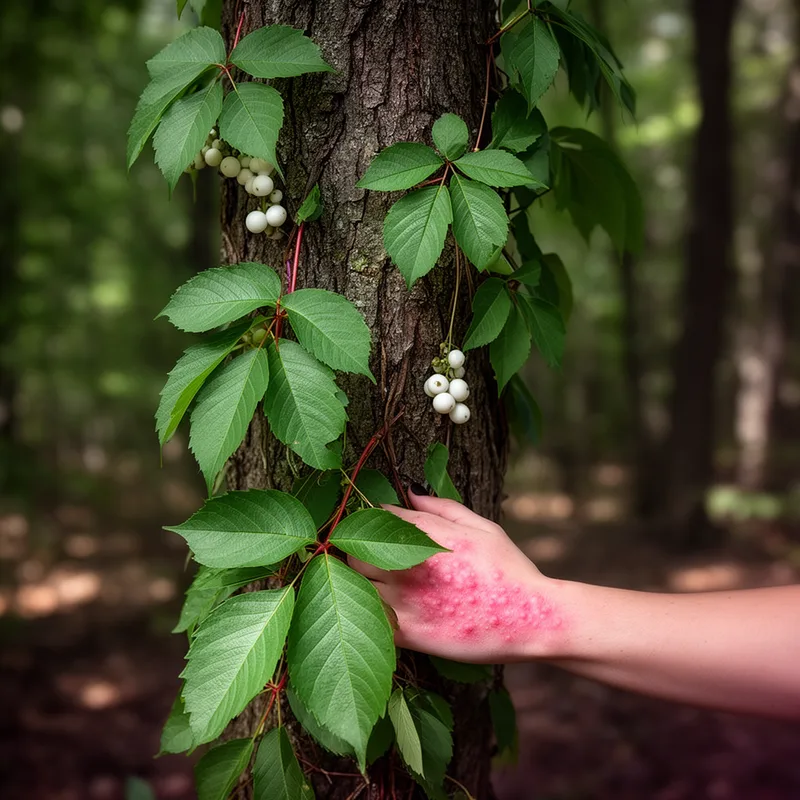
Rhus radicans
- noun
- /rəs ˈrædɪkənz/
- Specialized
- Rhus radicans can cause severe skin irritation if touched, so it's important to recognize it while hiking.
Examples
-
The white berries produced by Rhus radicans are a distinctive feature in its natural habitat.
-
Hikers are advised to learn how to identify Rhus radicans to avoid unpleasant skin rashes.
-
Rhus radicans is notorious for causing allergic reactions in people who brush against its leaves.
-
Be careful around Rhus radicans!
-
Many hikers are allergic to Rhus radicans.
-
People often develop itchy rashes after contacting Rhus radicans, making it crucial to identify this plant.
-
The oil found in Rhus radicans leads to allergic reactions, so hikers should be cautious near this climbing plant.
Synonyms
 9
4.2
9
4.2

A climbing plant with three leaflets and white berries that causes an itchy rash when touched

A climbing or spreading North American plant with three-part leaves that makes an oil causing a skin rash when touched

A climbing plant with three joined leaves and white berries that makes a skin rash when you touch it

A climbing plant with three-part leaves and white berries that can cause an itchy rash
Surface Forms
Morphology
Rhus + radicans
This is a Latin binomial name rather than an English compositional phrase: knowing 'Rhus' (a genus, sumacs) and an unexplained Latin element 'radicans' does not allow a B1 learner to infer the specific notion of a climbing, skin‑irritating plant (poison ivy). Botanical Latin names are essentially arbitrary labels for most learners and do not transparently combine common English words to yield the MWE meaning.
Etymology
Rhus radicans comes from old Latin words: Rhus names the sumac group and radicans means 'rooting' or 'climbing', because the plant often spreads and climbs on trees. Because this climbing plant has an oily sap that makes skin 'itchy' and causes a 'rash', the name refers to the species known today for causing skin irritation.