

Toxicodendron radicans
- noun
- /ˌtɒksɪˈkoʊdɛndrən ˈreɪdɪkənz/
- Specialized
- Hikers are warned to avoid touching Toxicodendron radicans because it can cause a severe rash.
Examples
-
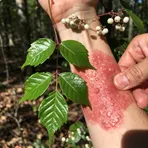
The three-part leaves of Toxicodendron radicans are a distinguishing feature of this harmful plant.
-
The white berries of Toxicodendron radicans are eaten by birds even though the plant is toxic to humans.
-
Research on Toxicodendron radicans helped scientists better understand allergic reactions.
-
Be careful of Toxicodendron radicans when hiking in the woods.
-
Many people are allergic to Toxicodendron radicans.
-
Hikers are warned to avoid touching Toxicodendron radicans because it can cause a severe rash.
-
Many people are allergic to Toxicodendron radicans, leading to uncomfortable skin reactions.
Synonyms
 9
4.2
9
4.2

A climbing plant with three leaflets and white berries that causes an itchy rash when touched

A climbing plant with three-part leaves and white berries that makes an oil causing skin rashes when touched

A climbing plant with three joined leaves and white berries that makes a skin rash when you touch it

A climbing plant with three-part leaves and white berries that can cause an itchy rash
Surface Forms
Morphology
Toxicodendron + radicans
This is a scientific Latin binomial: the first element 'Toxicodendron' clearly signals a toxic/irritant plant so a learner who knows that part can infer danger, but the species epithet 'radicans' is a Latin form (not a common English word) and its specific sense of 'rooting/creeping' or the exact identity (poison ivy) would not be predictable to a B1 learner. Because only part of the meaning (toxicity) is recoverable while the full referent and growth habit require specialized or Latin knowledge, the expression is only partially transparent.
Etymology
Toxicodendron radicans gets its name from two parts: toxicodendron meaning 'poison tree' and radicans meaning 'rooting' or 'spreading'. So the name gives a clear image of a poisonous plant that takes root and spreads, which fits this plant that causes a bad skin 'rash' when you touch it.