
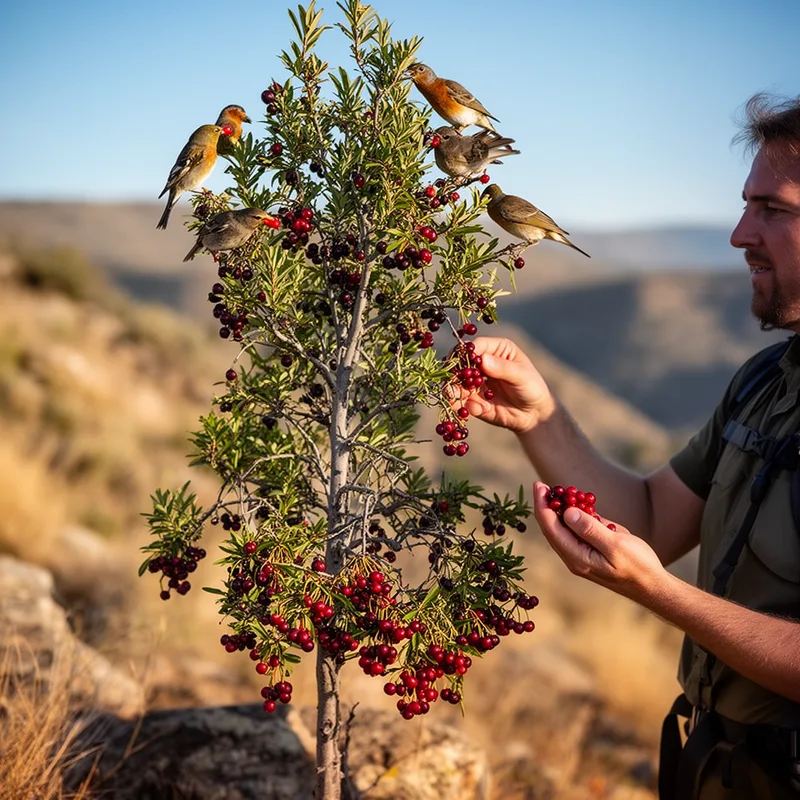
Prunus virginiana demissa
- noun
- Specialized
- Many foragers collect the fruit of Prunus virginiana demissa to make jams and jellies.
Examples
-
The Prunus virginiana demissa thrives in the foothills and canyons of the western United States.
-
Birds feed on the berries of Prunus virginiana demissa throughout the late summer.
-
The Prunus virginiana demissa produces small, dark fruits.
-
Many gardeners appreciate the Prunus virginiana demissa for its hardiness.
-
Birds feed on the berries of Prunus virginiana demissa throughout the late summer.
-
Many foragers collect the fruit of Prunus virginiana demissa to make jams and jellies.
-
The Prunus virginiana demissa thrives in the foothills and canyons of the western United States.
Synonyms
A wild cherry bush from the western United States with tart edible berries
A small tree or bush with small sour dark fruit used for jam and eaten by birds
Surface Forms
Morphology
Prunus + virginiana + demissa
This is a scientific Latin trinomial (genus + species + epithet) rather than a normal English phrase, so its specific referent (a particular variety of chokecherry) is not transparently derivable by a B1 learner from the parts. The third element 'demissa' is not a common English lexical item and understanding the name requires botanical/taxonomic knowledge, making the expression opaque to general learners.
Etymology
Prunus virginiana demissa comes from Latin words: Prunus means 'plum' or 'cherry', virginiana points to 'Virginia' or America, and demissa means 'low' or 'hanging down'. So the name helps you picture a low-growing, cherry-like bush with small, sour berries, which fits this western chokecherry.

