

Prunus demissa
- noun
- Specialized
- The berries of the Prunus demissa can be used to make jams and jellies despite their tartness.
Examples
-
Wildlife frequently feed on the fruit of Prunus demissa during late summer and early autumn.
-
In California, Prunus demissa often grows along stream banks and mountain slopes.
-
The Prunus demissa produces small, tart cherries.
-
Many hikers enjoy the Prunus demissa fruit during their trips.
-
In California, Prunus demissa often grows along stream banks and mountain slopes.
-
The berries of the Prunus demissa can be used to make jams and jellies despite their tartness.
-
Wildlife frequently feed on the fruit of Prunus demissa during late summer and early autumn.
Synonyms

A small wild tree with sour dark red berries that birds and people eat
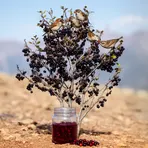
A small tree or bush with small sour dark fruit used for jam and eaten by birds
Surface Forms
Morphology
Prunus + demissa
The form is a Latin binomial: 'Prunus' clearly signals the genus (a type of tree/shrub/fruit), so a learner who knows that could infer this is a species of Prunus (i.e., some kind of fruit tree). However, the specific sense (that it is a wild chokecherry native to the western US with edible but astringent fruit) and the exact nuance of 'demissa' are not recoverable from the parts without botanical or Latin knowledge, so the item is only partially predictable.
Etymology
Prunus demissa comes from Latin: Prunus means 'plum' or 'cherry' and demissa means 'low' or 'drooping'. That's why the name paints the picture of a low, drooping wild chokecherry shrub with small, tart fruit that people can use for jam and animals often eat.

