

Petrarchan sonnet
- noun
- /ˈpɛtrɑrkən ˈsɒnɪt/
- Literature
- Many poets appreciate the structure of a Petrarchan sonnet, which helps convey emotional depth in their work.
- writing a Petrarchan sonnet
Examples
-
The form of Petrarchan sonnets, for instance, differs only in those structural aspects we choose to overlook.
Fiction book (1999) -
To understand classic poetry, one must learn about the characteristics of a Petrarchan sonnet.
-
Troy realized he'd fallen in love with Cressie after writing a gushy Petrarchan sonnet in her honor.
Fiction book (2001) -
I know Fred and Miriam from Professor McKay's Renaissance Literature class, where Fred regularly makes a sight for bored eyes by looking meaningfully at Miriam every time someone recites a Petrarchan sonnet.
Fiction book (1994) -
A Petrarchan sonnet consists of an octave followed by a sestet, making it a unique form of poetry.
Synonyms
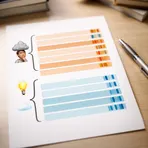
A 14-line poem with eight lines that present a problem and six lines that respond using set rhyme patterns
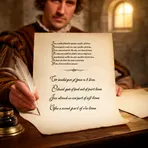
A sonnet with eight lines in the first part and six lines in the second, used by Petrarch
Surface Forms
Morphology
The phrase is a straightforward adjectival noun phrase: 'Petrarchan' indicates relation to Petrarch's style and 'sonnet' is a 14-line poem, so a learner who knows both constituents will infer it denotes a type/style of sonnet associated with Petrarch. While the precise technical details (octave/sestet and rhyme schemes) are specialist, the basic meaning is compositionally transparent from its parts.
Etymology
Petrarchan sonnet comes from the poet Petrarch, who often used this fixed poem shape for his love poems. The first eight lines, the octave, usually show a 'problem' or 'question', and the last six lines, the sestet, give a 'reply', so the name now means a sonnet with that 8+6 structure.

