

Italian sonnet
- noun
- /ɪˈtæljən ˈsɒnɪt/
- Literature
- Writing an Italian sonnet often challenges poets to master complex rhyme patterns.
Examples
-
Many poets prefer the Italian sonnet for its structured format and lyrical beauty.
-
However, like the Italian sonnet, it does demand rather a lot of syllabic repetitions for a rhyme-poor language like English.
Academic text (2003) -
In eight instances, the necessary so clause, the topic half of the simile, is deferred to the ninth line or sestet of an Italian sonnet.
Academic text (2005) -
An Italian sonnet consists of an octave followed by a sestet with specific rhyme schemes.
Synonyms

 29
6.2
29
6.2

A short poem of 14 lines with a set rhyme pattern often about love
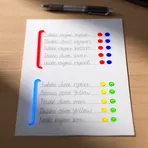
A 14-line poem with eight lines in one rhyme pattern and six in another

A sonnet with eight lines in the first part and six lines in the second, used by Petrarch
Surface Forms
Morphology
The phrase transparently combines 'Italian' (related to Italy/style) with 'sonnet' (a 14-line poem), so a B1 learner who knows both words will understand it refers to a sonnet of Italian/Italianate type. However, the specific technical definition (octave/sestet rhyme schemes) is specialized poetic knowledge not predictable from the constituents, so the term is only partially transparent.
Etymology
Italian sonnet comes from Italian poets like Petrarch, who made a clear two-part shape: an eight-line block called the octave and a six-line block called the sestet. The octave often shows a 'problem' and the sestet gives an 'answer', so the form is remembered as a sonnet that turns from question to reply.