

Peromyscus
- noun
- /ˌpɛrəˈmɪskəs/
- Specialized
- The Peromyscus, commonly known as the deer mouse, can be found in various habitats across North America.
- Peromyscus leucopus
- Peromyscus mouse
- white-footed Peromyscus
Examples
-
Peixoto and Abramson (2006) built a mathematical model to predict the effects of variation in biodiversity on HPS dynamics in North America, where the deer mouse (Peromyscus maniculatus) is the primary reservoir.
Academic text (2009) -
DTV is believed to be maintained between I. scapularis ticks and the white-footed mouse (Peromyscus leucopus).
Academic text (2013) -
Peromyscus densities also display a significant one-year lag relationship with precipitation.
Academic text (2002) -
These precipitation amounts were also significantly correlated with springtime Peromyscus densities one year later (r = 0.797, df = 9, p < .01; figure 5).
Academic text (2002) -
Research showed that Peromyscus populations thrive in forested areas, benefiting from the abundant food sources.
-
Scientists study Peromyscus to understand their role in the ecosystem as prey for larger predators.
Compounds

- Specialized
A small desert mouse that lives in burrows in the southwestern United States

- Specialized
A large dark mouse from the southeastern United States that lives in forests and thickets
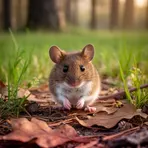
- Specialized
A small brown mouse from North America that often lives in woods and fields
Surface Forms
Etymology
Peromyscus comes from Greek parts; the ending mys means 'mouse' and the first part may mean 'small' or 'pouch'. A helpful way to remember the name is that it simply refers to a small, mouse-like animal, which is why it is the name for deer mice.

