
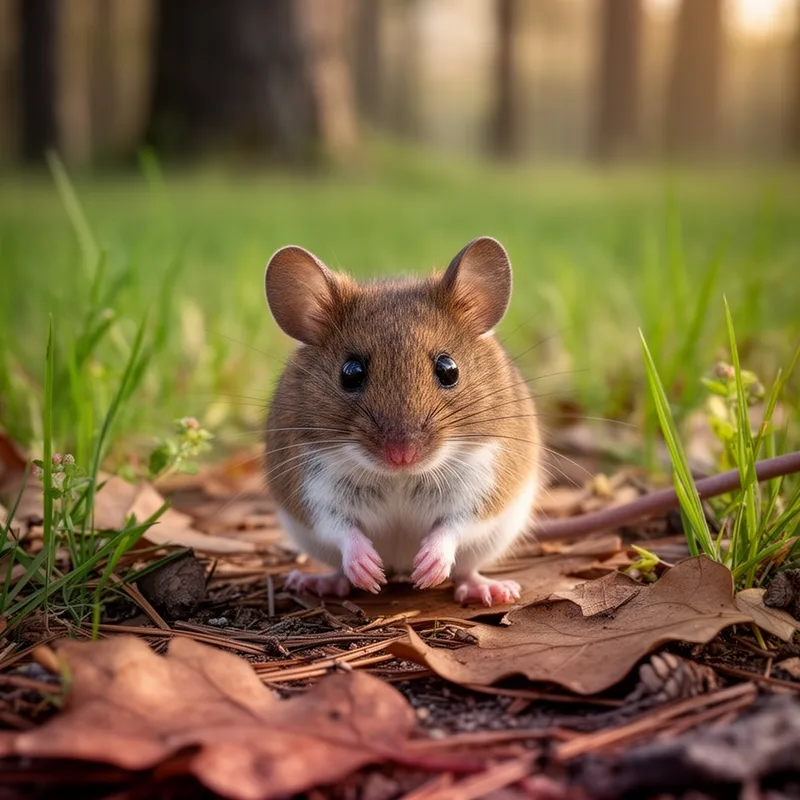
Peromyscus maniculatus
- noun
- /ˌpɛroʊˈmɪskəs ˌmænɪˈkjuːlətəs/
- Specialized
- The Peromyscus maniculatus is often used in scientific research due to its adaptability.
- deer mouse
- Peromyscus maniculatus mouse
Examples
-
Look at that Peromyscus maniculatus!
-
Unlike house mice, Peromyscus maniculatus prefers wooded and grassy habitats.
-
We spotted a Peromyscus maniculatus scurrying across the forest floor at dusk.
-
I saw a Peromyscus maniculatus yesterday.
-
The Peromyscus maniculatus has become a common sight in many North American forests.
-
Many researchers study the behavior of the Peromyscus maniculatus to understand the impact of habitat changes.
-
In the evening, the Peromyscus maniculatus can often be seen foraging for food in the underbrush.
Synonyms


 1
7.2
1
7.2
A small brown mouse from North America with a white belly and long tail
Surface Forms
Morphology
Peromyscus + maniculatus
This is a Latin binomial taxonomic name (a proper noun) rather than a compositional English phrase; knowing 'Peromyscus' as a genus label and an unknown 'maniculatus' does not allow a B1 learner to infer the common meaning 'deer mouse'. Scientific names function as arbitrary labels and are opaque to non-specialists, so the overall meaning cannot be derived from the constituents.
Etymology
The scientific name Peromyscus maniculatus may come from old words, with Peromyscus for 'mouse' and maniculatus for 'little hand', so imagine a small, quick mouse with tiny, hand-like paws. That's why the name fits the 'deer mouse', a small, active mouse often found in woods.