

Parthenocissus tricuspidata
- noun
- Specialized
- The old university building is covered in thick Parthenocissus tricuspidata that turns red every autumn.
Examples
-
Gardeners often plant Parthenocissus tricuspidata to create a green façade on stone walls.
-
Some birds are attracted to the purple berries produced by Parthenocissus tricuspidata in late summer.
-
The Parthenocissus tricuspidata is a popular choice for covering walls.
-
Many gardeners love Parthenocissus tricuspidata for its vibrant foliage.
-
Gardeners often plant Parthenocissus tricuspidata to create a green façade on stone walls.
-
Some birds are attracted to the purple berries produced by Parthenocissus tricuspidata in late summer.
-
The old university building is covered in thick Parthenocissus tricuspidata that turns red every autumn.
Synonyms
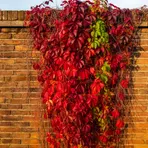
A climbing vine often grown on walls with leaves that turn red in autumn

A climbing plant with leaves that have three parts and purple berries grown for decoration
Surface Forms
Morphology
Parthenocissus + tricuspidata
This is a Latin binomial botanical name functioning as a proper label rather than a compositional English phrase; the species epithet 'tricuspidata' is not a common English word and its Latin morphology (tri- / cuspid-) is unlikely to be recognized by a B1 learner. Knowing 'Parthenocissus' only identifies the genus (a climbing vine) but does not allow a learner to derive the specific meaning ‘three‑lobed leaves / particular species’, so the overall expression is not transparently interpretable.
Etymology
Parthenocissus tricuspidata comes from old Greek and Latin words: partheno- means 'virgin' and tricuspidata means 'three-pointed'. So the name gives a simple picture of a climbing vine with leaves that have three points, which helps you remember this ornamental plant often used on walls.

