

Boston ivy
- noun
- /ˈbɔstən ˈaɪvi/
- She planted Boston ivy along the fence for a touch of greenery.
Examples
-
The Boston ivy covered the entire wall.
-
The old brick buildings were covered in Boston ivy, turning red in the autumn.
-
Boston ivy is a favorite among gardeners for its ability to quickly cover walls.
-
Have you seen the Boston ivy in the garden?
-
The old brick building was covered in Boston ivy, creating a beautiful green facade.
-
She planted Boston ivy along the trellis to add some greenery to her garden.
-
In autumn, the Boston ivy leaves changed to vibrant shades of red and orange.
Synonyms

 43
1.0
43
1.0

A climbing plant with green leaves and small dark berries that grows on walls

A climbing plant with leaves that have three parts and small purple berries used to cover walls

A climbing plant with leaves that have three parts and purple berries grown for decoration
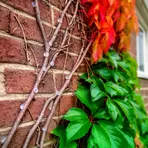
A woody climbing vine with small sticky pads on its tendrils, like Boston ivy
Surface Forms
Morphology
The noun is compositionally built from 'Boston' + 'ivy', so a learner who knows both words will infer it denotes a kind of ivy associated with Boston (i.e., a specific ornamental climbing plant). This place-name + plant naming pattern is non-idiomatic and cross-linguistically common, so the overall meaning is directly derivable from the constituents.
Etymology
Boston ivy was named because this climbing plant became popular for covering walls in the city of Boston. The word ivy shows it climbs and sticks to walls, so the name helps you remember it is 'a vine often grown on buildings'.