

Numenius borealis
- noun
- /njuːˈmiːniəs bɔːˈriːəlɪs/
- Specialized
- Researchers have extensively surveyed traditional breeding grounds for signs of Numenius borealis.
Examples
-
Historical records suggest that hunters significantly reduced Numenius borealis populations in the late 19th century.
-
The Numenius borealis was once abundant across North America.
-
The Numenius borealis was once abundant across the central plains of North America.
-
Have you seen a Numenius borealis in the wild?
-
Historical records suggest that hunters significantly reduced Numenius borealis populations in the late 19th century.
-
Researchers have extensively surveyed traditional breeding grounds for signs of Numenius borealis.
-
The Numenius borealis was once abundant across the central plains of North America.
Synonyms
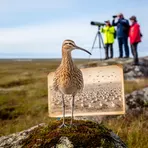
A North American bird that used to be common but is now very rare or extinct
Surface Forms
Morphology
Numenius + borealis
This is a taxonomic Latin binomial composed of a genus name (Numenius = curlew-like bird) plus a species epithet (borealis = ‘northern’). If a learner knows both constituents and understands that Latin epithets describe attributes, they can infer ‘a northern Numenius (curlew)’, but recognizing the Latin epithet and the naming convention requires extra, domain-specific knowledge, so the meaning is only partially predictable.
Etymology
Numenius borealis comes from the two parts of its Latin name: the first, Numenius, is the group name for long-billed 'curlews', and the second, borealis, means 'northern'. So the name gives the image of a long-billed 'northern' curlew, which is why it refers to the bird also called the 'Eskimo curlew'.

