
Myrmeleontidae
- noun
- /ˌmɜr.məˈliː.ɒn.tɪ.di/
- Specialized
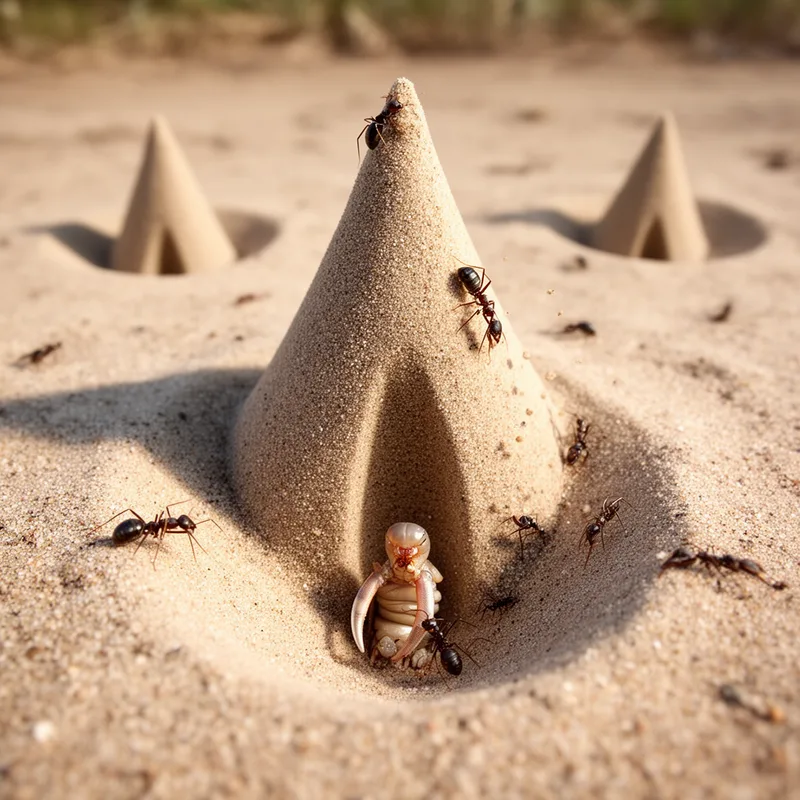
- The Myrmeleontidae are best known for their pit-building larvae that prey on ants and other small insects.
Examples
-
Scientists study the behavior of Myrmeleontidae larvae to understand their unique hunting strategies.
-
The family Myrmeleontidae includes more than 2,000 species of antlions found worldwide.
-
The Myrmeleontidae family includes fascinating insects.
-
Look at that Myrmeleontidae larva waiting for its prey!
-
Researchers are fascinated by the Myrmeleontidae larvae that construct intricate pits to trap unsuspecting ants.
-
Many species of Myrmeleontidae are adept hunters, using their conical pits to catch small insects effectively.
-
Children observed the Myrmeleontidae larvae digging conical pits in the sand during their nature walk.
Synonyms

A group of insects called antlions with slender bodies and larvae that dig sand pits to catch ants
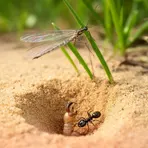
A small insect whose larva digs sand pits to trap ants and whose adult looks like a dragonfly

A winged insect like a dragonfly whose young dig small cone-shaped pits in sand to trap ants and other insects
Compounds
- Specialized
A group of insects called antlions with slender bodies and larvae that dig sand pits to catch ants
Surface Forms
Morphology
Etymology
Myrmeleontidae comes from the Greek parts myrmex ('ant') and leon ('lion'), so it literally means 'ant-lion'. That image helps you remember this insect family: their young dig small cone-shaped pits to trap ants, and the ending -idae shows it is a family name.

