

antlion fly
- noun
- /ˈæntˌlaɪən flaɪ/
- In their larval stage, antlion flies dig conical pits in sandy soil to trap unsuspecting ants.
Examples
-
The antlion fly is fascinating for its predatory larvae, which dig traps in sandy soil.
-
While hiking in the desert, we watched an antlion fly dart through the air near a dry creek bed.
-
Entomologists often study the unique life cycle of the antlion fly in their field research.
-
The antlion fly is known for its unique hunting technique.
-
Have you ever seen an antlion fly in your garden?
-
The antlion fly uses its impressive speed and agility to catch small insects in mid-air.
-
Children are often amazed when they discover an antlion fly lurking near the edge of a sandy playground.
Synonyms
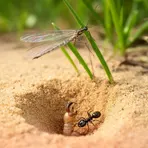
A small insect whose larva digs sand pits to trap ants and whose adult looks like a dragonfly
Surface Forms
Morphology
The compound directly combines 'antlion' (a specific insect) with 'fly' (a winged insect), so the intended meaning — the winged/adult form of an antlion — is transparently derived from the parts. This follows a common noun+noun compounding pattern found across languages, so a B1 learner who knows both constituents would readily infer the meaning.
Etymology
Antlion fly comes from the insect's young stage called an antlion, which digs a small pit in the sand and waits to catch ants like a tiny 'lion', while the adult is a winged fly. So the name tells you both about the ant-catching young and the flying adult.

