

Myrmecobius fasciatus
- noun
- Specialized
- Unlike other marsupials, the Myrmecobius fasciatus is mainly active during the day as it searches for termites.
Examples
-
The Myrmecobius fasciatus is recognized for its distinctive stripes and long, slender tongue.
-
Did you know that the Myrmecobius fasciatus primarily feeds on termites?
-
Researchers are working to protect the habitat of the endangered Myrmecobius fasciatus in Western Australia.
-
The Myrmecobius fasciatus is a unique marsupial native to Australia.
-
The Myrmecobius fasciatus uses its strong claws to dig into termite mounds.
-
Researchers are studying the behavior of the Myrmecobius fasciatus in its natural habitat.
-
In the wild, the Myrmecobius fasciatus can consume thousands of termites in a single day.
Synonyms
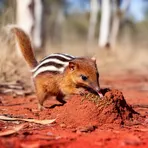
A small Australian animal with a long nose that eats termites

A small Australian animal with a pouch, long snout, and strong claws that eats termites and is almost extinct
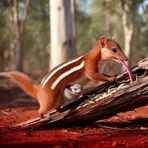
A small Australian animal with a pouch that eats termites and has stripes
Surface Forms
Morphology
Myrmecobius + fasciatus
This is a scientific Latin binomial (genus + species) naming a specific animal (the numbat); the second element 'fasciatus' is a Latin adjective rather than an ordinary English word. Even if a learner knew 'Myrmecobius' means a termite‑eating marsupial, a B1 learner who knows the constituent items would not reliably infer the full meaning from these parts because taxonomic names are lexicalized and rely on specialist/Latin knowledge.
Etymology
The name Myrmecobius fasciatus comes from older word parts: myrmec- meaning 'ant' and fasciatus meaning 'banded' or 'striped'. So the name shows a small striped animal that eats insects like ants and termites, helping you remember the numbat's look and diet.

