

Myrmecobius
- noun
- /ˌmɜːrmɪˈkoʊbiəs/
- Specialized
- The Myrmecobius, or numbat, is native to southwestern Australia and is an endangered species.
Examples
-
The Myrmecobius is recognizable by its distinctive stripes and long tongue adapted for termite hunting.
-
Researchers observed a Myrmecobius searching for termites among fallen logs in the forest.
-
The Myrmecobius is known for its long tongue.
-
Have you ever seen a Myrmecobius in the wild?
-
Researchers observed a Myrmecobius searching for termites among fallen logs in the forest.
-
The Myrmecobius is recognizable by its distinctive stripes and long tongue adapted for termite hunting.
-
The Myrmecobius, or numbat, is native to southwestern Australia and is an endangered species.
Synonyms

A small Australian animal with a pouch, long snout, and strong claws that eats termites
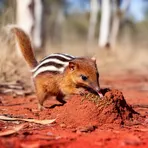
A small Australian animal with a long nose that eats termites

A small Australian animal with a pouch, long snout, and strong claws that eats termites and is almost extinct
Compounds
- Specialized
A small Australian animal with a pouch, long snout, and strong claws that eats termites
Surface Forms
Etymology
Myrmecobius comes from Greek parts myrmec- meaning 'ant' and -bius from bios meaning 'life'. So the name means 'ant-living', which helps you remember this small Australian marsupial (the numbat) that lives by eating ants and termites.

