
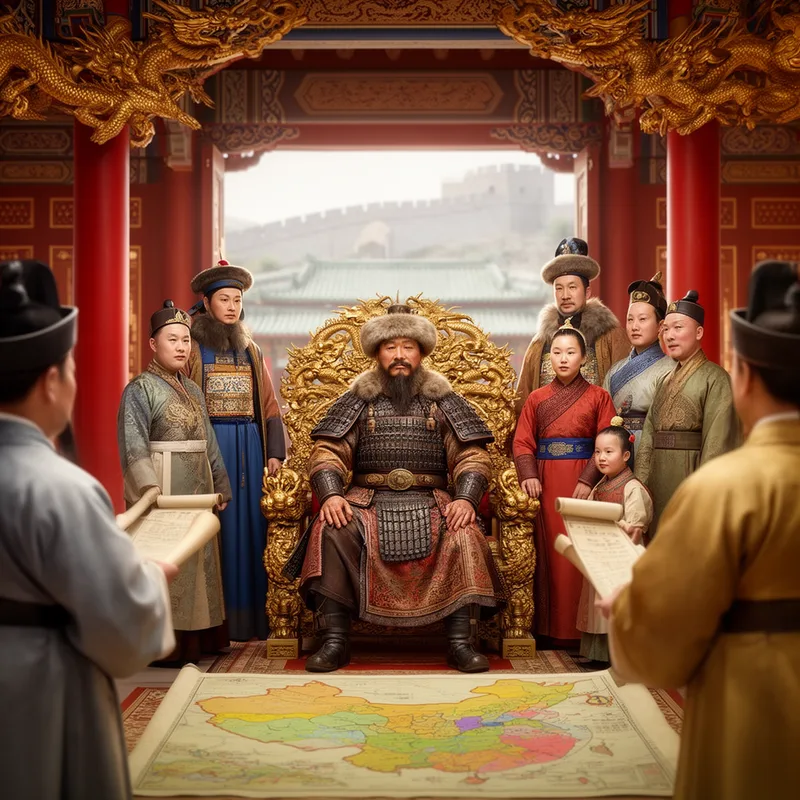
Mongol dynasty
- noun
- /ˈmɒŋɡəl ˈdaɪnəsti/
- Under the Mongol dynasty, trade along the Silk Road greatly expanded.
Examples
-
The Mongol dynasty brought significant changes to China's administration and culture.
-
Many important inventions were introduced during the rule of the Mongol dynasty in China.
-
The Mongol dynasty was known for its vast empire.
-
Did the Mongol dynasty influence Chinese culture?
-
The Mongol dynasty was responsible for the introduction of many diverse cultural practices in China.
-
During the Mongol dynasty, China's economy flourished due to increased trade with other countries.
-
The Mongol dynasty effectively united various regions of China under a single rule.
Synonyms

 14
9.0
14
9.0

A Chinese dynasty ruled by the Mongols from 1279 to 1368

A ruling family in China from 1279 to 1368 that was started by the Mongols under Kublai Khan
Surface Forms
Morphology
The phrase is directly compositional: 'Mongol' (the people/ethnic group) combined with 'dynasty' (a succession of rulers) yields 'a dynasty ruled by Mongols.' A B1 learner who knows both constituents can derive this core meaning even if they may not know the specific historical dates or the label 'Yuan.'
Etymology
Mongol dynasty comes from the time when Mongol leaders took control of China and set up their own royal family called the 'Yuan'. They ruled China and opened trade routes, so Mongol dynasty means the period when Mongol rulers were in power from 1279 to 1368.