
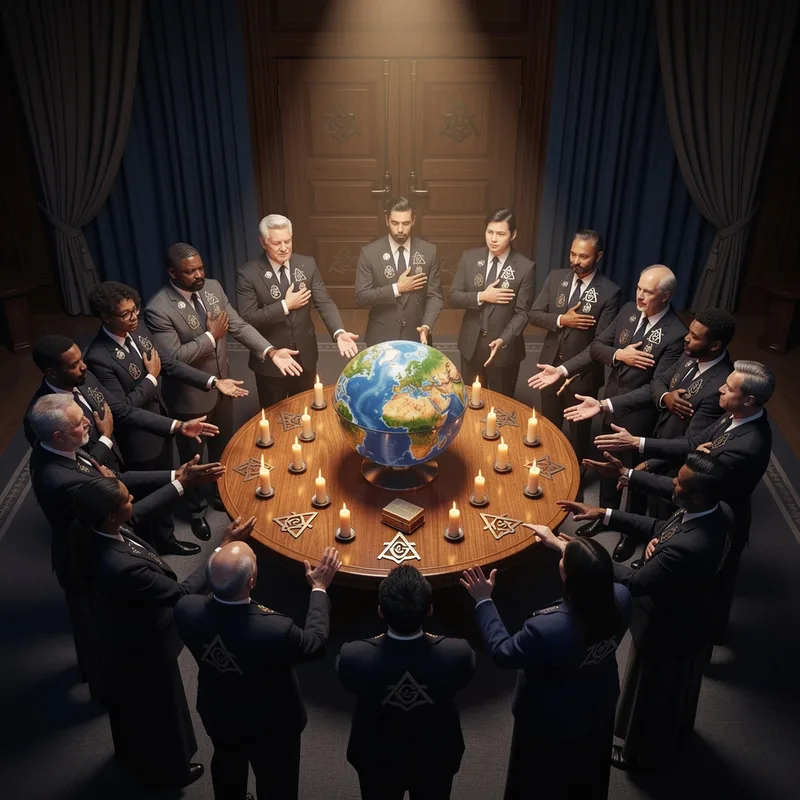
Masonry
 5
8.4

- noun
- /ˈmeɪsənri/
- The single feature that characterizes the efforts of Masonry is charity; for a Mason, charity represents an expression of love.
- history of Masonry
- reference to Masonry
- Mystery of Masonry
Examples
-
Washington: Bob, you are certainly right about eliminating the reference to Masonry.
Academic text (1991) -
Second, any association with Masonry would bring strong negative comments from our opponents and the anti-Masonic movement.
Academic text (1991) -
Also, from my experience in England and France, any reference to Masonry must be eliminated.
Academic text (1991) -
Even today, the basic teachings of Masonry are found in the principles involved in building, as for the masons of yesteryear.
Academic text (1993) -
While tradition and allegory trace Freemasonry to these early sources, history traces Masonry to the growth of Gothic architecture.
Academic text (1993) -
In Austria, where Mozart was born, for example, Maria Teresa reigned for forty years and tolerated Masonry, maybe because her husband, Francis of Lorraine, was one.
Academic text (1991) -
Charles Blanchard is remembered for opposing the modernization of the curriculum, campaigning against Masonry, and joining the fundamentalist defense of orthodoxy against theological modernism.
Academic text (1993) -
Many influential leaders have been members of Masonry, promoting ideals of brotherhood and charity.
-
The principles of Masonry emphasize moral values and community service among its members.
-
Throughout history, Masonry has played a significant role in various cultural and political movements.
Synonyms
 7
9.8
A group of people around the world with secret rituals and symbols
Compounds

- Specialized
A style of building using very large rough stones placed together without mortar, often in ancient walls


Surface Forms
Morphology
Etymology
The word Masonry comes from mason meaning 'stone worker' and the ending -ry that shows a group or a type of work. A helpful memory is that the Freemasons grew out of real masons' lodges, so Masonry came to mean the organisation or society of those members and now often refers to the worldwide group of Freemasons.