
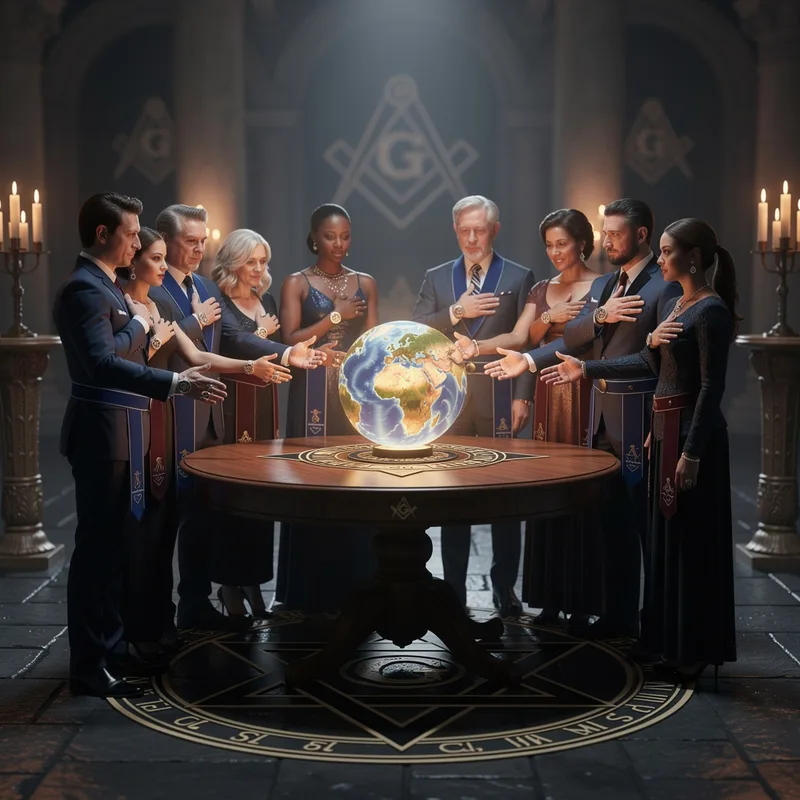
Freemasonry
 7
9.8

- noun
- /ˈfriːˌmeɪsənri/
- Candidates for Freemasonry are required to declare a belief in a Supreme Being.
- Freemasonry and Rosicrucianism
Loading YouTube…
Watch on YouTubeHe was the Grand Master of the Grand Lodge of all Freemasonry.
- He was the Grand Master of the Grand Lodge of all Freemasonry.
- He was afraid of the influence of Freemasonry.
- Your initiatory systems, Freemasonry, you've got the Entered Apprentice and then you've got the adept and then the master.
- It's not Freemasonry actually came into existence because it's a school.
- And he he was later in Freemasonry Albert Pike, who was considered really the.
Examples
-
From this beginning, Freemasonry spread quickly and came to the United States in 1731.
Academic text (1993) -
The cause of human progress has always been the concern of Freemasonry.
Academic text (1993) -
Worshipful Ben, Freemasonry has been the only institution in which leaders of the colonies could meet on common ground.
Academic text (1991) -
Nelson Mandela has ties to and is most likely a member of Freemasonry.
Blog text (10) -
Albert Pike was the head of the Supreme Council of Freemasonry starting in 1859 for 32 years.
Blog text (18) -
For example, in Europe, almost immediately after Yorktown, anti-Masonic groups caused Freemasonry to go underground, and the number of Masonic lodges was drastically reduced.
Academic text (1991)
Synonyms
 29
6.3
A group whose members keep their identity and activities hidden from others
 5
8.4
A worldwide group of people who meet in private and follow shared ceremonies
Surface Forms
Morphology
Etymology
Freemasonry comes from free and mason; a mason was a worker who 'builds with stone', and 'free' once meant someone 'allowed to travel' to work. These travelling stone workers formed groups with secret signs and rituals, so Freemasonry today is a worldwide society of members who share special rites and symbols.