
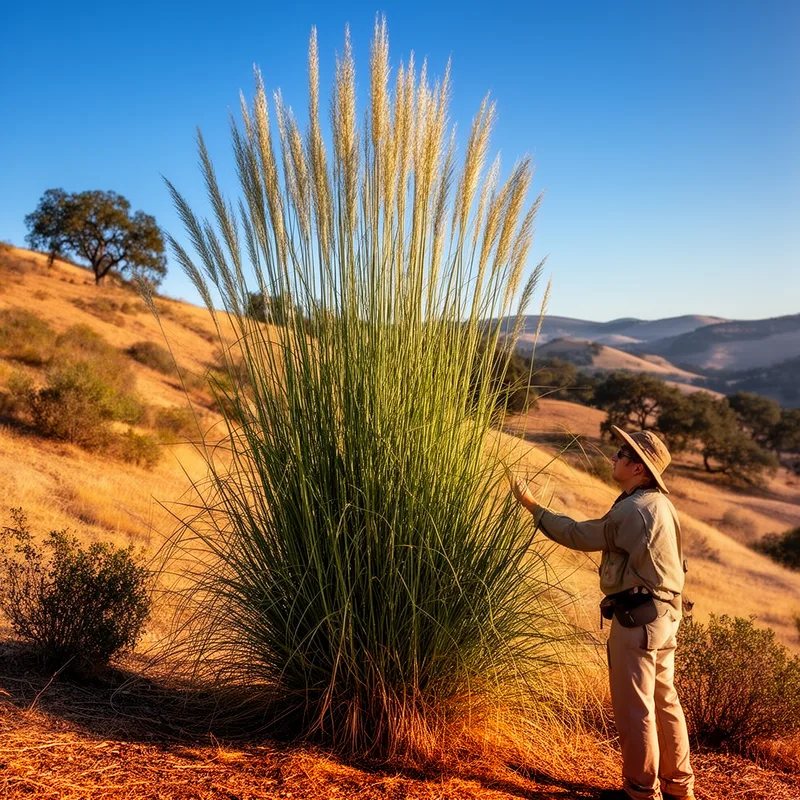
Leymus condensatus
- noun
- Specialized
- Leymus condensatus is a hardy grass that flourishes in dry areas of western North America.
Examples
-
Leymus condensatus is commonly used in habitat restoration projects across California.
-
The Leymus condensatus thrives in arid regions.
-
Leymus condensatus can grow over two meters tall in optimal conditions.
-
Native Americans traditionally used Leymus condensatus for basket weaving and building shelter.
-
Have you seen a Leymus condensatus in bloom?
-
Leymus condensatus provides an important habitat for various wildlife species native to California.
-
Leymus condensatus can be an excellent choice for landscaping in drought-prone gardens.
Synonyms
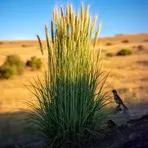
A tall grass called giant wildrye that grows in western North America

A large tall grass that grows for many years and helps hold soil
Surface Forms
Morphology
Leymus + condensatus
This is a scientific Latin binomial (proper name) rather than a normal English phrase; a B1 learner who 'knows' the parts would still not be able to infer the species description because the species epithet 'condensatus' is not an English word and its sense is not provided. Taxonomic names function as labels and require specialist or etymological knowledge, so the overall referent ('a stout perennial grass native to western North America') is not derivable from the constituents.
Etymology
Leymus condensatus comes from old words: Leymus is the name for this grass group and condensatus means 'packed together' or 'thick', which gives the picture of grass growing in tight clumps. That's why the name fits this sturdy grass that lives many years and often grows in dry parts of western North America.

