

giant ryegrass
- noun
- /ˈdʒaɪənt ˈraɪˌɡræs/
- US
- Farmers in California often plant giant ryegrass for erosion control.
Examples
-
Researchers are studying giant ryegrass as a potential bioenergy crop due to its rapid growth.
-
The tall stalks of giant ryegrass can provide shelter for wildlife in open fields.
-
Farmers often plant giant ryegrass to improve soil stability in erosion-prone areas.
-
The giant ryegrass grows taller than most other grasses.
-
Farmers often plant giant ryegrass to improve soil stability in erosion-prone areas.
-
The tall stalks of giant ryegrass can provide shelter for wildlife in open fields.
-
Farmers in California often plant giant ryegrass for erosion control.
Synonyms
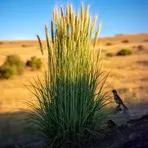
A tall grass called giant wildrye that grows in western North America
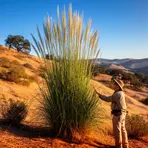
A tall grass that lives for many years and grows in dry western North America
Surface Forms
Morphology
The meaning 'a notably large ryegrass' is directly and transparently derived from 'giant' (very large) modifying 'ryegrass' (a grass species). This simple adjective + noun composition follows normal English semantic rules and is cross‑linguistically common, so a B1 learner who knows the constituents would understand the MWE.
Etymology
Giant ryegrass comes from how the plant looks: it grows very tall and looks like rye, so people joined giant and ryegrass to show it is a large, rye-like grass. That's why the name now means 'a tall, strong grass' that farmers use to protect soil and provide quick cover.

