
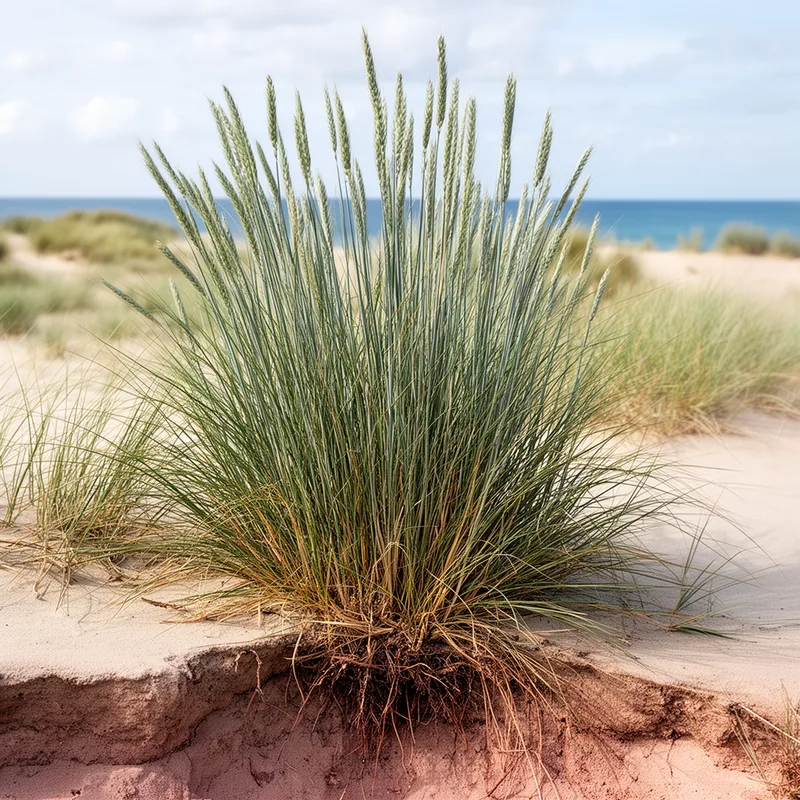
Leymus
- proper noun
- Specialized
- The ornamental grass Leymus condensatus 'Canyon Prince' is native to Prince Island.
- Leymus chinensis
- seedlings of Leymus
- germination of Leymus
Examples
-
This may be an adaptive strategy of Leymus chinensis seeds to resist high salinity stress.
Academic text (2014) -
Young seedlings of Leymus chinensis elongated quickly in distilled water.
Academic text (2014) -
Under saline and alkaline conditions, adaptive strategies of Leymus chinensis during germination and early seedling stage were greatly different.
Academic text (2014) -
Therefore, Leymus chinensis has different adaptive mechanisms to maintain osmotic balance during adaptation to saline and alkaline stresses.
Academic text (2014) -
Our results showed that alkaline stress also significantly affected seed germination (germination percentage and germination rate) of Leymus chinensis.
Academic text (2014) -
After the germination recovery test, we found that above 50% of nongerminated seeds of Leymus chinensis germinated again when they were transferred from strong saline stress (250 mM) to distilled water (Table 1).
Academic text (2014) -
Young seedlings of Leymus chinensis elongated quickly in distilled water.
-
This may be an adaptive strategy of Leymus chinensis seeds to resist high salinity stress.
Compounds

- Specialized
A dune grass that grows on Pacific beaches to hold sand and stop erosion
- Specialized
A tall grass that lives for many years and grows in dry western North America
Surface Forms
Etymology
Leymus likely comes from an old Greek name for a kind of 'grass', so botanists used it as the name of a genus of wild rye. That's why Leymus refers to rye-like grasses.

