
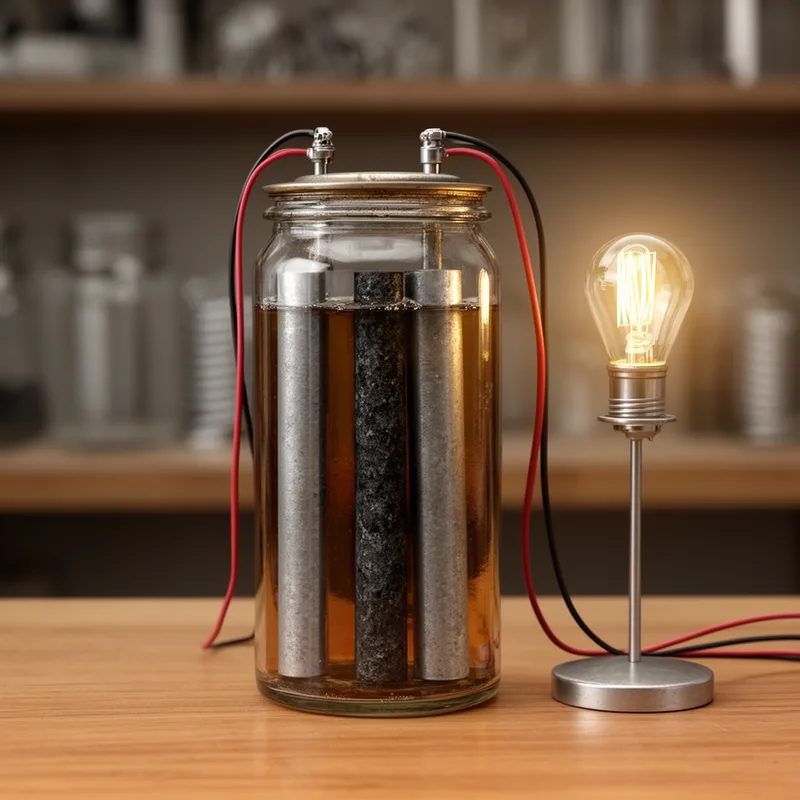
Leclanché cell
- noun
- /lɛkˈlɑːnʃeɪ sɛl/
- Archaic
- The original flashlight used a Leclanché cell as its power source.
Examples
-
Many early telegraphs were powered by the Leclanché cell, appreciated for its reliability.
-
Although largely replaced today, the Leclanché cell played a key role in battery development.
-
The Leclanché cell was widely used in early telegraphs.
-
Many Leclanché cells were replaced by more efficient batteries.
-
The original flashlight used a Leclanché cell as its power source.
-
Many early telegraphs were powered by the Leclanché cell, appreciated for its reliability.
-
Although largely replaced today, the Leclanché cell played a key role in battery development.
Synonyms


 1
6.7
A device that makes electricity from a reaction between two metals and cannot be charged again

A device that makes electricity when chemicals react and cannot be recharged
Surface Forms
Morphology
Leclanché + cell
The first constituent 'Leclanché' is an eponym/proper name with no lexical meaning that would signal the technical properties, while 'cell' clearly denotes a battery unit, so a learner who knows 'cell' can infer this is a kind of battery. However the specific sense (a primary voltaic cell producing ~1.5 V and its historical usage) cannot be derived from the name alone, making the expression only partially predictable.
Etymology
Leclanché cell is named after Georges Leclanché, who made a simple, reliable battery in the 1860s. People soon called his invention the 'Leclanché cell', so today the name refers to that kind of early cell used to power telegraphs and flashlights.